














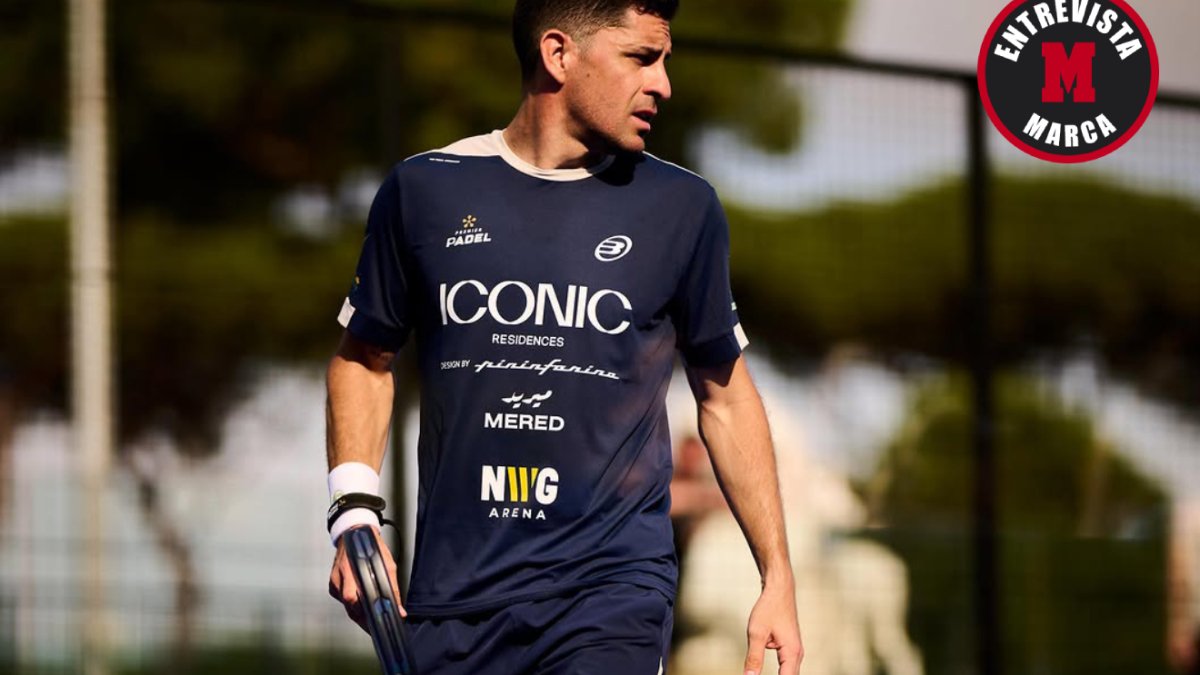
The week of the Italy Major at the Foro Italico in Rome served as the venue for a new meeting of the Premier Padel Steering Committee, the table where the regulatory adjustments of the circuit were defined for 2027. Maxi Sánchez (Villa Mercedes, 39 years old), in his advisory role as representative of the professionals before the FIP and Premier Padelgave the present there: the former world number one, in dialogue with MARCA Padel, outlined the approved measures and sent a clear warning to the rest of the group: “We players must learn to take care of our daily bread.”
With a self-critical tone and focused on the institutional growth of padel, Sánchez did not avoid the controversy about certain recent behaviors on the court and admitted that “Lately there have been cases that do not give the impression that we are a 100% professional sport”. In addition to supporting the reduction of the average and the new registration limitations for the FIP Tour, the Argentine player put on the table what promises to be the next big regulatory debate: “I would like to propose a format to regulate partner changes.”
Ask. What is your personal assessment of the changes that were presented for 2027?
Maxi Sanchez. It is a super positive change because it is what the players have been trying to modify for a long time. The two most important points for me are the drop in average and the elimination of the top players in the FIP Tour.
Q. The change in the average implies that from 2027 the 21 best results will be added instead of the 22.
MS. There I want to make a parenthesis in that the idea was always to have a much lower average, which was 18, but we knew that it was not going to be achieved. We fought for 20, and it ended up at 21. It’s not ideal, but it’s progress for us.
Q. Why do you think the ideal average would be 18 tournaments?
MS. I think that is what the professional circuit demands due to how the competition is and what the physique supports. They would be the 18 best results of each one, regardless of whether there are more tournaments. To ensure 18 good results, one would play between 22 and 25 knowing that in several of them you may stumble and you will go to recover the points from someone else. Today, having 22 means you have to have a much higher base. But there is a push and pull because the promoters wanted to feel sure of the players’ participation.
Q. What was the feedback from the promoters’ side?
MS. They disagreed, but wanted to hear the player’s view of why he wanted to lower that number. They obviously saw it from a business point of view, and as a player I can try to understand them because it is their business and they want to fill their tournaments. And to fill their tournaments, they need to make sure they have all the players. They thought that the tournament needed more forethought, and I made them see the importance of physical appearance and care. That’s why I think Premier Padel reached a consensus and left it at 21, which is an improvement but still not ideal. What I thought is that if the tournament meets the conditions we want, the player will not have a problem playing 25 tournaments knowing that his average is 21. Padel today is very competitive: in 18 tournaments you do not get your best results, you need to play 22, 23, 24 or 25 for 18 to be your best.
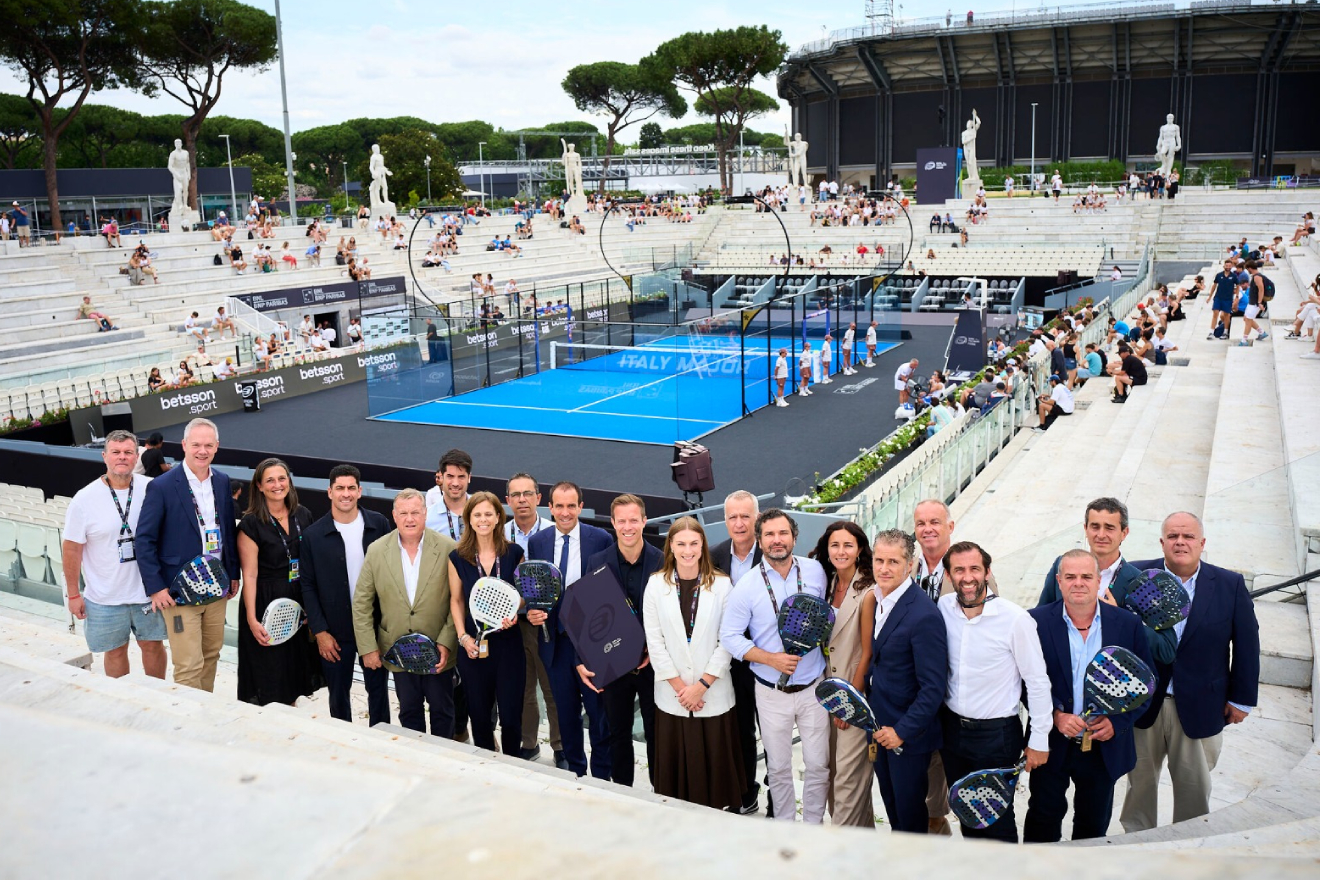
The last meeting of the Premier Padel Steering Committee, during the Italy Major at the Foro Italico.
Q. How do you explain that they demand to play fewer tournaments, but at the same time there is always something in rest weeks? If it’s not an exhibition, it’s a team game, a home run or whatever.
MS. I agree. That’s where we players must learn to take care of our daily bread. I sincerely believe that more than the promoter’s fear that the player will not want to play his tournament, it is a fear that other organizers or other promoters will appear in those weeks that, a priori, are for rest. Today Premier Padel is giving very good conditions, but perhaps another younger player needs more things and says “I’m going to go play so-and-so’s exhibition because he pays me”, but today, with my experience, I would keep what I have because it is my daily bread. It is the circuit that is going to grow, the one that gives it prestige through the ranking and the one that, at the end of the day, feeds me because it is what I sell to sponsors.
But it is also true that we have gained the freedom to choose where and when to play. Today there is nothing that limits that because there is no contract that does not allow the player to do so. At the change of circuit we fight for freedom and free weeks, but there are many loose ends. We wanted free weeks, but we can’t go against our circuit either. Today Agus Tapia, to give an example, is called from anywhere in the world and they pay him a lot, a lot of money to go play for a weekend. And it’s perfect. But that comes to him because of what he does at Premier Padel. So it’s complex.
Q. And about the limitation of players at the top of the ranking on the FIP Tour?
MS. That’s also good because it will help the players in the Top 20 take better care of each other. It was something they had been asking for. If that is open as it was these seasons, it gets out of control: all the players play everything, and in the end you have to go compete because your rival is competing. The system is leading you to that, and I believe that these changes try to respond to this problem.
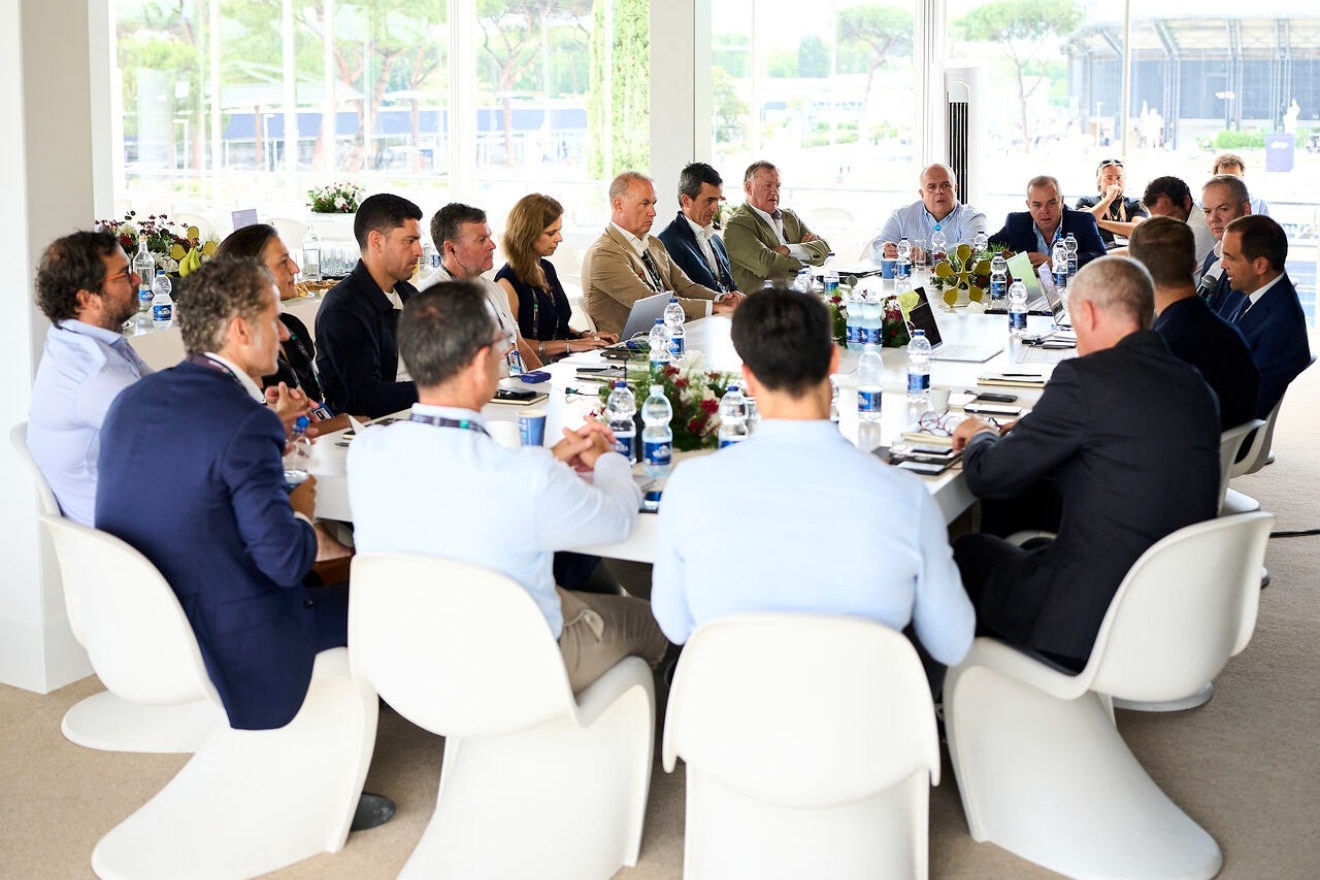
The last meeting of the Premier Padel Steering Committee, during the Italy Major at the Foro Italico.
Q. More points will be given for the first rounds of Premier. Do you think it was outdated?
MS. Yes. That is a very good idea that did not come from the players but directly from FIP, and I think it is a very positive decision. Our professional circuit, the one that meets the conditions, is Premier Padel, and it has to have more value. The FIP Tour is made for the evolution of the sport and for there to be more players in the world, but where the player has to make strength to play is Premier Padel. It was happening to us that there were many players who preferred to play the FIP Tour for points even though the conditions of the tournaments are much inferior to those of the Premier. We must encourage people to bet on Premier Padel and have a desire to play it.
Q. And the fact of not being able to sign up in the same week with two different partners?
MS. There have been episodes that do not give a good image. The player does not do it maliciously, but if we are regulated with regulations it will be much better for him. It is not a limitation on partner changes as such, but it gives you a little more order: if on Monday I play in Premier Padel with a partner, I cannot go on Friday to play a FIP with another. Lately there have been cases that do not give the image that we are a 100% professional sport.
Q. What other changes that were not applied this time do you consider necessary?
MS. At the moment I wouldn’t play much more. You have to put these into operation and roll them to see how they fit. On paper I see them well, but in practice the reality is seen. We are talking about Star Point, which is something that I personally like: training is a little difficult at first, but it brings a fair share of dynamism to professional competition without losing its essence. Television was super satisfied and will continue in 2027. I repeat what I always say: we are a young sport and we must be open-minded to exploring improvements year after year. And along the way learn to live with mistakes.
Q. There is a topic that is always debated on social networks: the regulation of partner changes as such. Is this something that was discussed at the decision-making table?
MS. It is not something that has been discussed, but I would like to propose it to FIP or Premier and there are several options: market windows (summer/winter) or by number of teammates per year (two changes and you cannot change more). You would have to consider what to do in cases of injuries, how you do it… It’s trial and error. It is not something that I see applicable immediately, but it is a talk that will have to be given sooner rather than later. Or at least I would love to.
Q. And in this sense, something that Paquito Navarro asked for and was talked about a lot: doing tours of slow, intermediate and fast tracks. Has this been discussed at the last meeting in Rome?
MS. It would be great because it would give more foresight about what we are going to find. It was commented that the intention is to standardize the Premier calendar so that every year the tournaments are on the same dates or to modify as little as possible. If they have that basis of leaving the tournaments fixed, they can work on Paco’s idea.
Fr. Fede Chingotto said in a press conference that no one had consulted him about anything. And it is surprising that he is president of the PPA. Why is the PPA not part of that table?
MS. The truth is that I don’t know what the current situation is, it is a super delicate issue. I was the creator of the PPA at the beginning, along with Bela, Pablo Lima, Paquito, Ale Galán… It was something that we took a lot of love for and promoted this change of scheme in paddle tennis. Today the PPA is not part of that committee, and I do not know the internal because I have not been a member for quite some time. I would like, from wherever I am, to help make this player-circuit or association-circuit relationship more fluid and for the player to feel represented and have weight. I think that the IPPA (Female Players Association) wants to continue growing together with Premier Padel. His lawyer was on the committee, although no player. I know the relationship between PPA and Premier is broken, but I would like to help it improve.
Q. Who calls you to these committees?
MS. Premier Padel and the FIP call me. I am representing the players and my position is advisory and informative; I don’t decide anything, I just ask, inform myself and try to help the relationship improve. When they ask me, I give my opinion and then I pass on what I said to the players.
Q. Having been part of the PPA in the change from World Padel Tour to Premier: What do you regret or what would you have done differently?
MS. The only thorn in my mind is that a company that helped padel grow a lot, like World Padel Tour, is no longer there. The big change came with them, no one can deny that. I was not in the first stage of the Pádel Pro Tour, but I did experience the World Padel Tour and it helped us to be recognized as professionals. If I have to regret something, it is not having been able to reach an agreement so that the World Padel Tour could continue managing its tournaments or working hand in hand with Premier Padel. I also don’t know if that union could happen, they were different ideas and we players had little room. But the thorn is having lost that circuit that did things very well.