


















The withdrawal of Eritrea of the qualifying phase for the World Cup 2026 opens a window to a reality much deeper than football: a closed country, marked by indefinite military service, repression and escape as the only way out. Fernando Lacasa tells it in Flee Eritreaa novel that puts a human face to a tragedy that rarely enters the great showcase of sport.
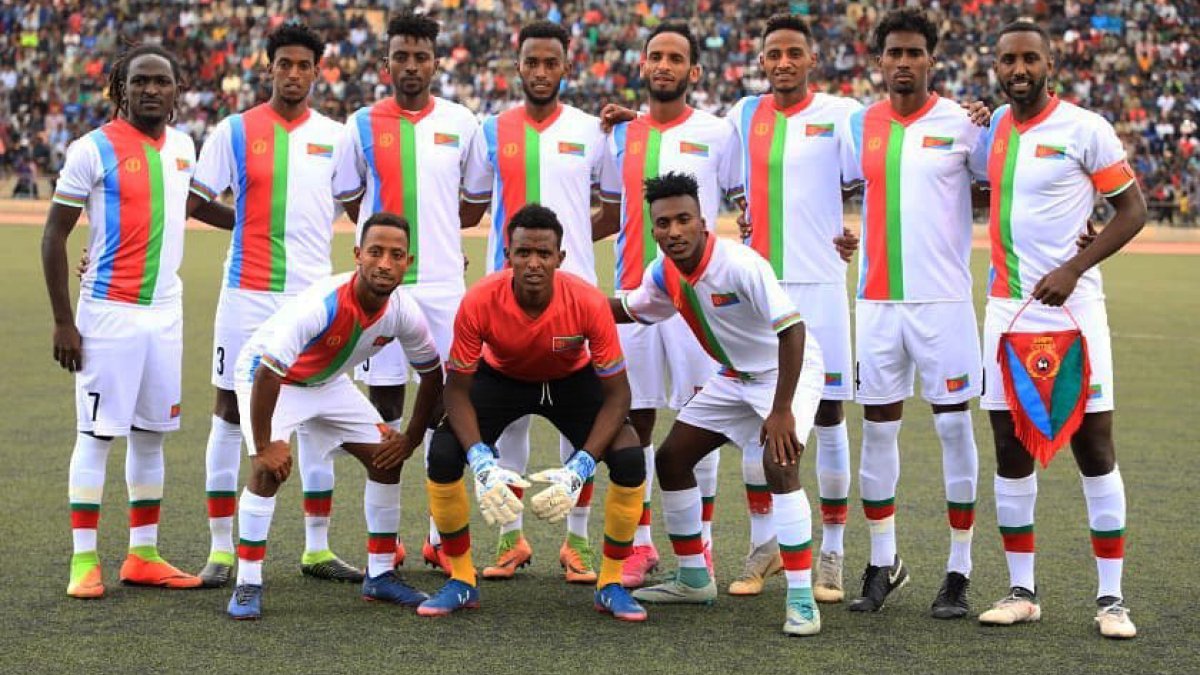
He World It is the place where countries show themselves to the world. The flags, the anthems, the t-shirts, the children painted in the stands, the footballers crying before the ball rolls. For a month, even the smallest nations like Cape Verde either Curacao They find a corner of glory on the map. But there are countries that don’t even make it to that party. Eritrea doesn’t play Eritrea was erased before it started. His federation withdrew the team from the qualifying phase for the World Cup 2026 and all their games were cancelled. The data, apparently minor within the enormous machinery of global football, contains a much more uncomfortable question: what happens in a country so that even wearing the national shirt outside its borders can become an opportunity to drain?
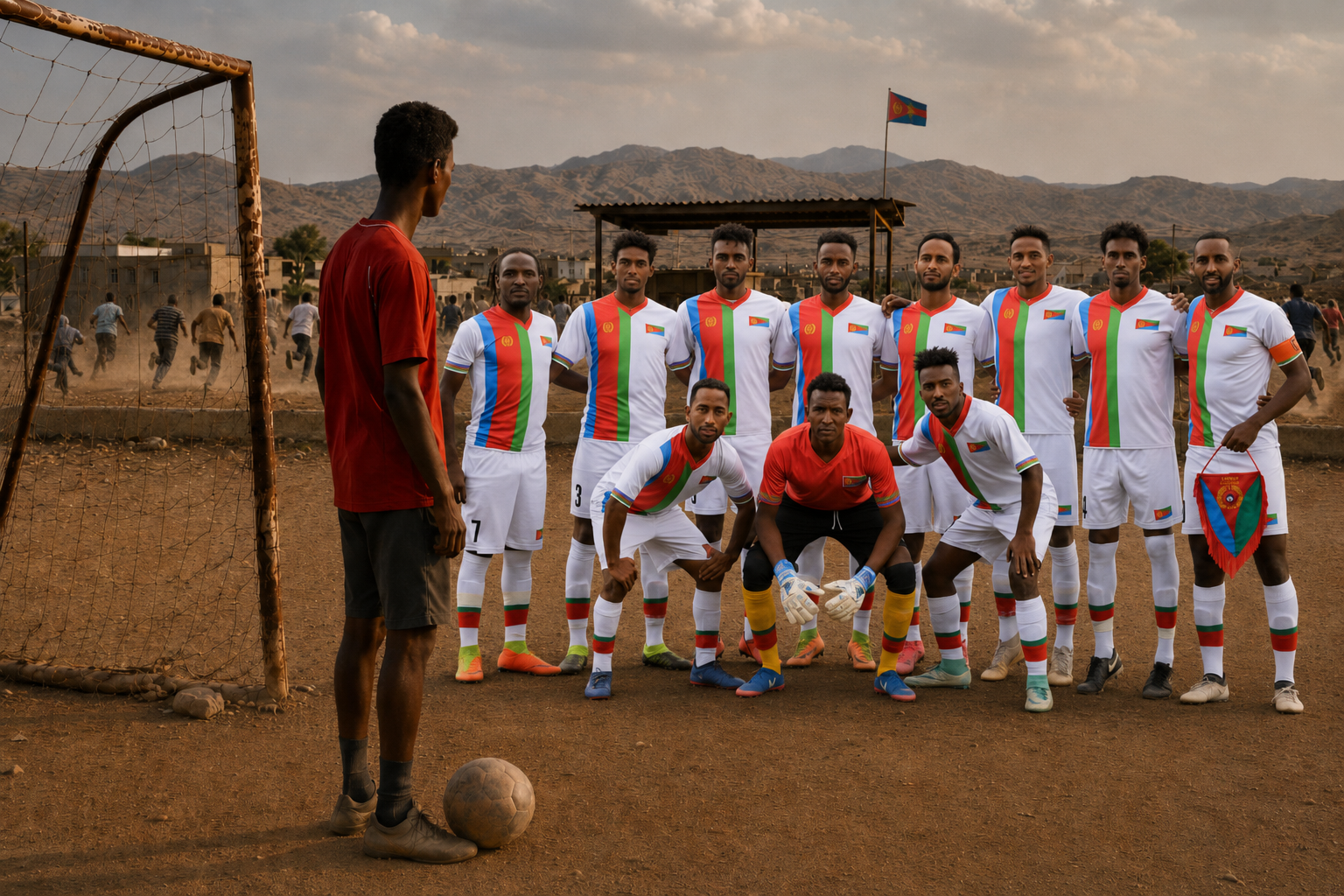
Image created with AI.
That’s where it comes in Flee Eritreathe novel by Fernando Lacasa. It doesn’t talk about football, but it helps to understand better than many sports chronicles why there are places where the word escape carries more weight than any dream of classification. The author came to Eritrea from a simple and almost shameful observation: not knowing how to locate the country on the African map. “Not knowing how to locate Eritrea on the map of Africa was proof of disinterest towards a country that is called the african north korea“, explains to BRAND. That initial ignorance led him to investigate its history and its present. What he found was the terrible journey of a hope turned into a regime: the rebels who achieved the independence of Ethiopia and dreamed of democracy ended up leading to a caudillo dictatorshipno elections since 1993without Constitution, without political parties or freedoms.
Lacasa He saw a literary subject there, but he did not want to write from the pulpit or from the thesis. “Although the transformation of a national leader—from hero to tyrant—is not a unique case, I found it interesting to be told from the point of view of the characters, without theories or ideological approaches,” he maintains. That decision is key. In times of Worldwhen football tends to turn each country into a shield, a shirt or a lineup, Flee Eritrea forces us to look at what is left out of the shot: the young people who cannot choose their future, the families who live under surveillance, the bodies that belong to the State before themselves.
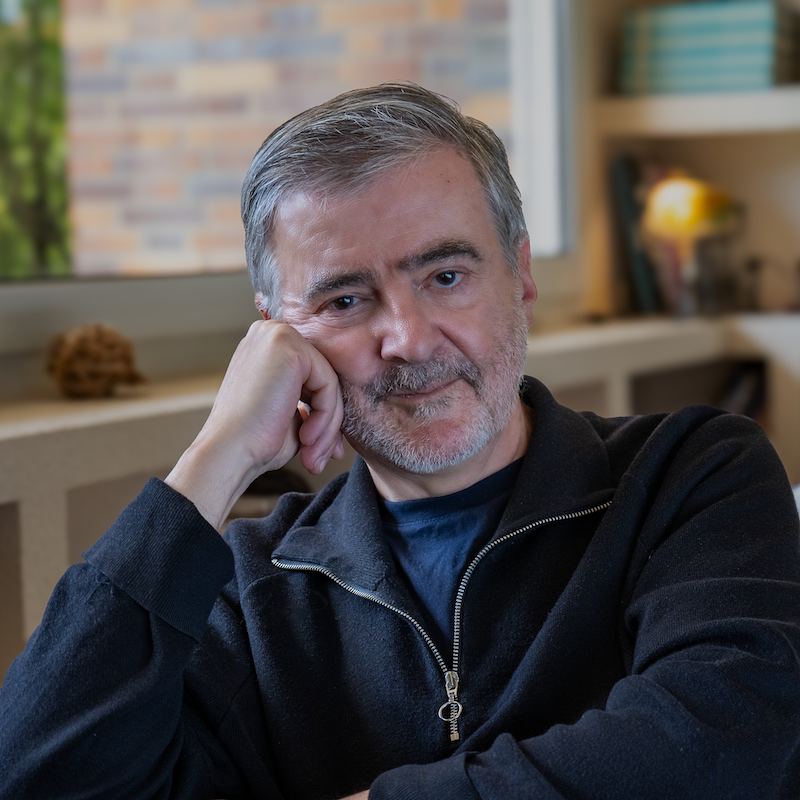
Fernando Lacasa
The novel does not need the ball to appear to dialogue with football. Just look at that idea of the national team as a symbol. In almost any country, being called up is an honor. In others, traveling with the team can mean something different: a crack in the wall, an open border, an opportunity not to return. Therefore the absence of Eritrea on the way to World It is not just an administrative note. It is the sporting echo of a larger reality: that of a country of which many youths They dream of leaving because staying doesn’t seem like a free way of life either.
To stay is to submit to a discipline that turns them into slaves; leaving is risking your life
Fernando Lacasa, to MARCA
For years, Lacasa He read mostly essays during his time as a university professor. I was used to data, analysis, socio-political and economic correlation. But when writing fiction He understood that the novel works with other tools. “Fiction aims to generate emotions in the reader and that is difficult to achieve with the coldness of statistics, no matter how alarming it may be,” he says. In Flee Eritrea I could choose very vulnerable characters, families crossed by inequality and young people condemned to decide between obedience or drain.
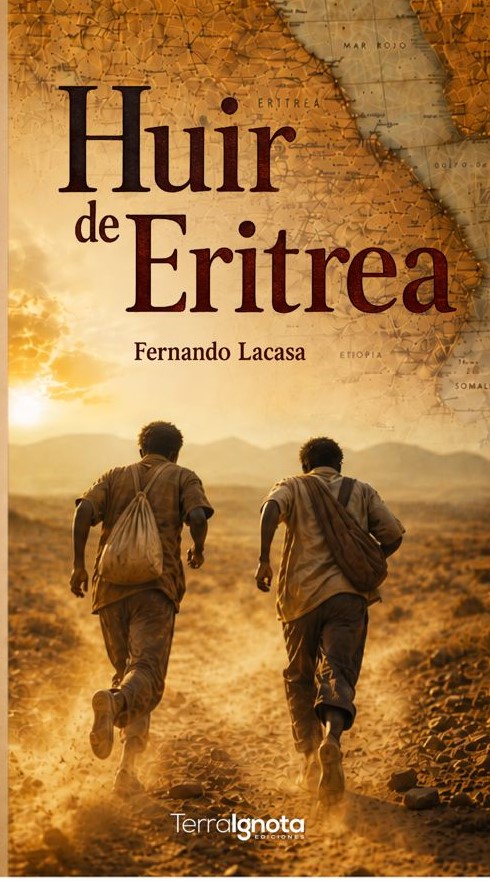
Cover Fleeing Eritrea
The protagonists are children of heroes of the revolution that led to Eritrea to the independence. Their parents try to guide them towards a military career, towards graduation as officers, towards a safe place within the system. But the critical idealism of these adolescents leads them to reject even the privileges from which they start. Later they discover that their personal searches lead them to the same destiny as the rest of them. young eritreans: a military service that lasts decades in a country that functions like a large barracks. From there, without parental support, there are only two paths: submit for life or follow the rebellious path that their families defended in domestic discussions.
Beauty is in the characters’ desire to survive.
Fernando Lacasa, to MARCA
Lacasa moves between documentation and fiction without raising a visible border. “I have tried to ensure that there were no boundaries between reality and fiction,” he admits. Its characters are imaginary, but the decision that leads them to flee responds to a concrete reality. The drama is born from the impositions of a regime in which any advantage—studying, working in your profession, living close to your home, prospering minimally—is achieved by showing signs of docility and “good behavior.” The phrase serves the novel, but also to understand why sport can become dangerous territory for certain people. States: because it grants visibility, travel, outside contact and the possibility of choosing.
My characters are not heroes: they are people who fight, who doubt, who are afraid
Fernando Lacasa, to MARCA
The author does not stop only in the physical escape towards Europe or towards the refugee camps. He is also interested in internal leak. “Both angles interest me,” he says. Without verisimilitude in the physical escape, the story would lose consistency; Without the inner escape and the doubts of those who leave their past behind, the story would lose humanity. That is one of the keys to the book. His characters have plenty of political reasons to escape from a atrocious dictatorshipbut they cannot do it without doubting themselves, without wondering if they are capable, without feeling the guilt of abandoning the world they knew.
This nuance is essential to avoid the easy story of the migrant becoming a figure or a threat. Lacasa know that Eritrea It is a distant reality for him Spanish reader and that, too often, the news about emigration They arrive wrapped in toxic language: illegals, criminals, parasites. “Without a doubt, the European reader has to make an effort to open his mind and understand the situation that leads these people to embark on a desperate adventure,” he reflects. In the Eritrean case, remember, emigration is not only economic, it is also political, and that should immediately activate the international protection. However, the author warns that asylum and refuge status is being increasingly restricted in Europe.
Everyone walks their path with deep humanity
Fernando Lacasa, to MARCA
The big question of novel It is as simple as it is brutal: stay or leave. And neither option seems truly free. “To stay is to submit to a discipline that turns them into slaves; Leaving is risking your life without knowing what you can get,” he summarizes. Lacasa. Both alternatives are desperate. Each character reformulates their life according to the decision they make. Those who leave lash out with an intimate accusation: “I wasn’t capable.” Those who remain judge the daring of others according to the result, as if the value of a drain It depended only on arriving safely or not.
Eritrean emigration is not only economic, it is also political
Fernando Lacasa, to MARCA
There is in all of this a reading that goes beyond the book and reaches the sport. He soccer It is often presented as a passport, as a social elevator, as a story of salvation. But in closed countries it can also be a threat to power. A boy who plays well doesn’t just dream of scoring goals. He dreams of going out, of seeing another world, of discovering that life can be organized in a different way. He World boasts of uniting cultures, but also exposes the absences. Eritrea is not there And not being there, in this case, says a lot.
The look of Lacasa It is not born from a tourist curiosity. For decades he worked in international cooperation and that experience helped him get closer to these stories without paternalism. “Our minds are open to the landscapes we have seen; it is not necessary to have traveled to other continents, but it is necessary to put ourselves in the shoes of others,” he maintains. In his case, the stories he writes would not have emerged without the journey of his own life.
Flee Eritrea talks about migration, freedomdignity, women, repression and fear. When asked what topic struck him the most while writing, Lacasa He doesn’t choose just one. Point out all the forms of violenceoppression and institutionalized abuse. Even more so in a country that, in his words, has become “a prison.” The author recalls the systematic violation of rights, the lack of freedoms, arbitrary arrests and the disappearance of dissidents. And puts the focus on the african womenwhose suffering is prolonged by atrocious cultural customs: ablation, child marriage, polygamy and violations.
A complicated situation
Despite the harshness, his prose seeks a sober beautynever ornamental. “In the midst of pain it is difficult to find beauty,” he concedes. He finds it in the desire to survival of the characters, in the friendship that makes them strong within their vulnerability and in the lessons learned along the way: that life is fragilethat a flexible mind achieves more than those who only believe in “its truth”, and that the beauty common to every human being is closer to recognizing our weaknesses than to boasting about triumphs.
Flee Eritrea is your first novel published, although not the first she writes. Lacasa He assures that he writes novels to live in them. In this story he identifies with characters who are not heroes, but people who fight, doubt, are afraid and carry some form of guilt. “Everyone walks their path with a deep humanity“He explains. That was what convinced him that this story deserved to be told.
While the World continues its course, Eritrea stays out of the window. There is no anthem, no flag on the grass, no starting eleven, no dream of a big night. But maybe that absence be precisely the story. That of a country where the verb flee It is not a sporting metaphor, but a vital possibility. That of one youth that does not fight to qualify, but to choose. That of a novel that reminds us that behind every border, every absent selection and every name that does not appear on the calendar can hide a tragedy that is too human to be reduced to a line in the archive of FIFA.