














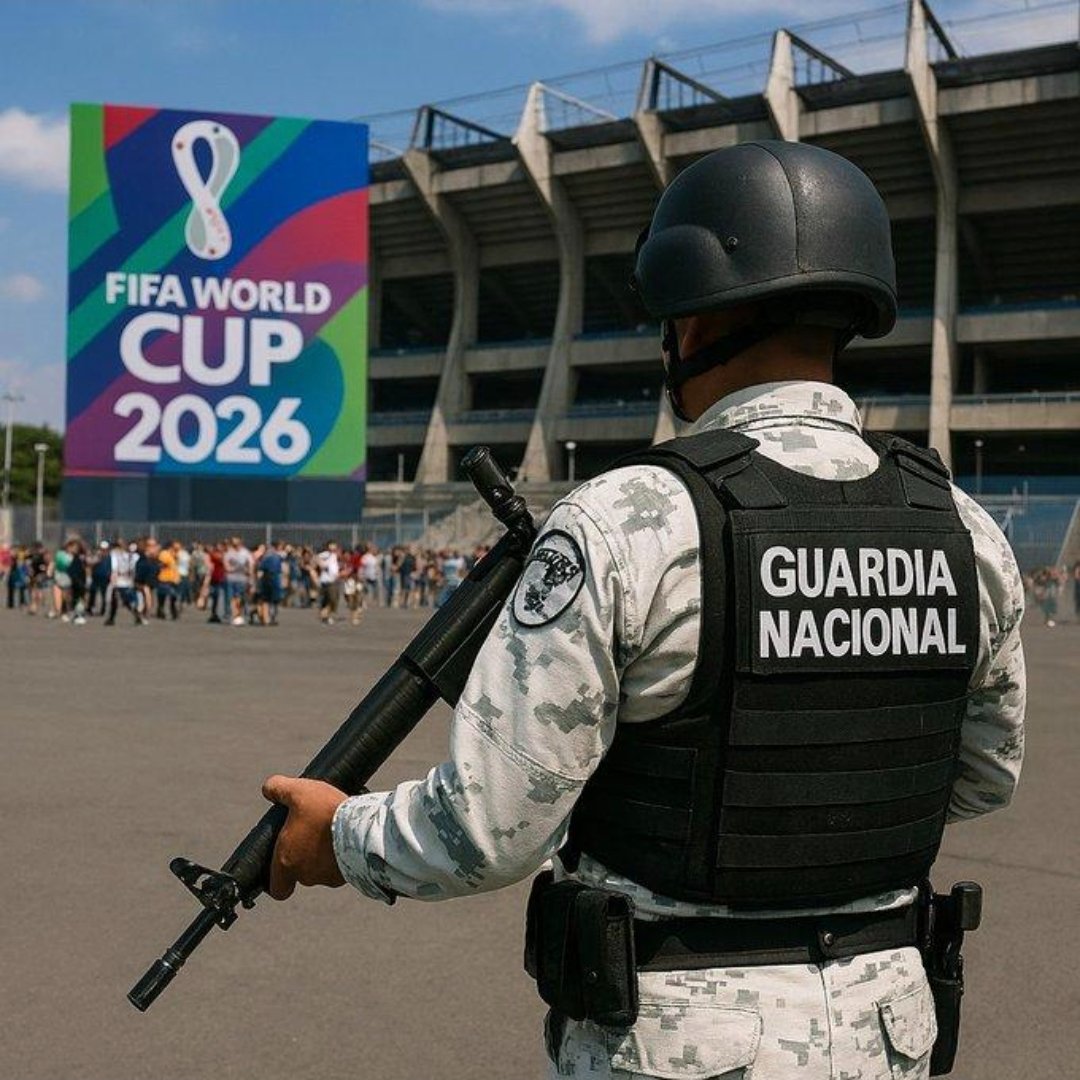
Millions of soccer fans are expected to gather in 11 U.S. cities for the World Cup, and security officials are coordinating with state, local and federal law enforcement agencies before unprecedented security threats.
“This is not just a national or continental event. For us in the United States, there are 11 regional events,” said Andrew Giuliani, the executive director of the White House World Cup task force. “And so we rely on law enforcement expertise in these areas to also understand the complexities of this and bring in federal resources.”
The tournament, which begins next week, is the largest in history, with 48 teams, 104 matches and three host countries. Giuliani spoke on Thursday at a World Cup kick-off event about the security challenges of preparing for an event of this magnitude, from monitoring trends between states to mitigating heat.
“We also want to make sure that we’re not isolating Miami from Seattle, because if a police officer is seeing something in Miami Beach, say, or in downtown Miami, that someone in Seattle is also seeing, we have to make sure we reconcile that information if there’s a larger trend that could be threatening our other host cities,” Giuliani said. “That’s where the complexity of this lies.”
.
Preparations have been intensifying for months. Giuliani and members of the task force have attended major events across the United States, including the college football national championship game in January, to observe how host cities coordinate security and logistics.
The cities hostesses also received $625 million in federal funds for security to bolster preparations, and Giuliani indicated that some of that money will be used to reimburse law enforcement officials for additional security measures.
A recent challenge that planners monitor is an outbreak of a rare type of Ebola virus that has affected Congo and Uganda. The World Health Organization has declared it a public health emergency of international concern.
Giuliani noted that security officials confirmed with the Congolese national team that they have not been in the region for more than 21 days, and have warned the team not to bring anyone into its training camp who has been in Congo in the past three weeks.
“If they did that, and if someone were to present symptoms, they would put at risk not being able to travel to Houston for the World Cup,” he said.
Congo had already canceled a three-day training camp in preparation for the World Cup and a planned farewell for fans in the capital Kinshasa due to the outbreak. In addition, it was looking for a way to play its qualifying match against Chile after the mayor of the Spanish city of La Línea de la Concepción denied authorization for the match due to health concerns related to the outbreak.
Federal officials are also debating changing FIFA’s policy to ban fans from carrying refillable water bottles to the tournament’s 16 stadiums across North America, including some with limited or no shade.
“Certainly understand that fans with bottles — if there’s something frozen there, they can throw it, use it as a weapon,” he said. “We want to make sure fans have access to water, so they can stay hydrated. We also want to make sure that everyone is safe and that people can’t bring in a weapon. So those conversations are still going on.”