














There was a time when the World Cup was, above all, the biggest football tournament on the planet. Today it remains that way, but it has also become one of the greatest economic machines in world sport. The World Cup United States, Mexico and Canada It is not only breaking sports, attendance and audience records. It’s also breaking the bank. And it is that the FIFA expects to earn more than 12,000 million euros, an unprecedented figure that places the 2026 World Cup in another dimension.
“It’s bigger than anything the world has ever seen.”
The jump is historic. In the cycle of Qatar 2022FIFA declared revenues of 6.6 billion euros. Four years earlier, with Russia 2018, The figure was around 5.6 billion. Brazil 2014 generated around 5,000 million and Germany 2006 was around 2,800 millions. The World Cup has always grown, but it has never done so at this speed. In less than two decades, FIFA’s income has quadrupled. And the 2026 edition threatens to change the scale of the business forever. “It’s bigger than anything the world has ever seen. Not just a football event, but any event,” Infantino explains.
The World Cup no longer has a ceiling
The explanation begins in the format. For the first time, the tournament brings together 48 teams and stretches up to 104 games, forty more than the traditional model of 32 teams. More teams means more markets, more fans, more interested television stations, more sponsors and more days of competition. Each match is a commercial window. Each venue, a different business opportunity that FIFA is exploiting to the fullest.
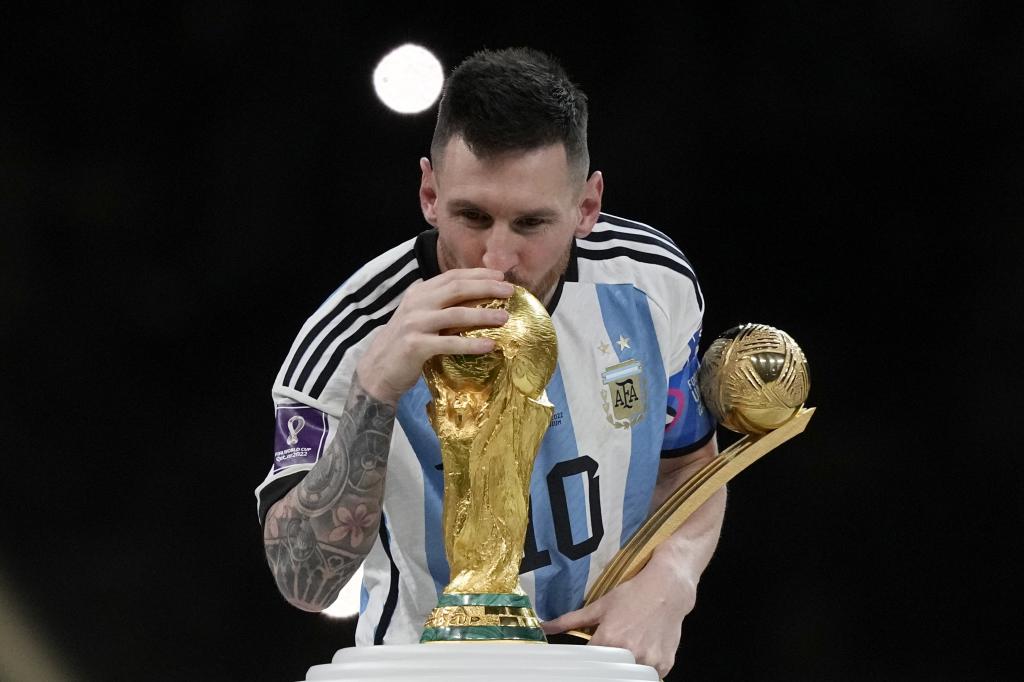
Messi kisses the 2022 World Cup.
But the 2026 World Cup is not just bigger. It is, above all, more expensive and more sophisticated. FIFA has understood that football no longer only sells tickets, but experiences. There appears one of the great transformations of the tournament: hospitality. VIP packages, premium areas, exclusive services, luxury restaurants and corporate access have turned some matches into products designed for eexecutives, large companies and clients with high purchasing power. The New Jersey final will not only be the most important game in football. It will also be one of the most exclusive sporting events on the planet.
FIFA gains absolutely nothing from this. All trade agreements were signed long before
The comparison with 1994 explains the change. The last time the United States hosted a World Cup, a ticket to the final cost around 160 euros.. Now, 32 years later, some premium packages for the 2026 final are close to 35,000 euros. And the United States has accelerated that transformation. The North American market has been turning sport into premium entertainment for years. The SuperBowl, the NBA, Formula 1 in Las Vegas or the large international concerts have shown that there is an audience willing to pay enormous amounts to experience an event from the inside.. The World Cup has ended up fully entering into that logic. Dynamic pricing, hospitality packages, official resale, global sponsorships and personalized experiences They are already part of the new World Cup ecosystem.
The two most expensive minutes in history
Tickets are just one part of the business. Audiovisual rights continue to be the great financial engine of FIFA. Television pays more and more because the World Cup remains one of the few products capable of gathering massive live audiences around the planet (sponsorships sold out, more than 6 billion accumulated viewers and $2.6 billion expected from ticket sales). One of the biggest controversies of the tournament has been the hydration breaks. Officially they respond to a health issue due to the high temperatures recorded in many venues. However, They also represent an extraordinary commercial opportunity for televisions. “FIFA gains absolutely nothing from this. All trade agreements were signed long before. For us it is a purely sporting question,” Infantino explained.
Each interruption lasts about three minutes. After the referee’s whistle, The networks have about two effective minutes to insert advertising blocks without losing hardly any playing time. In a World Cup of 104 games, industry analysts estimate that this additional space can move around 220 million euros in advertising investment. All the networks… except Telemundo, the only television station to let the World Cup live and feel without interruptions. This is how they tell it when the rest of the chains are going to do business. FIFA insists that the breaks respond exclusively to sporting criteriabut the television market knows that those minutes also have enormous economic value.
Sponsors have also found an incomparable showcase in the 2026 World Cup. The presence of the United States, Mexico and Canada multiplies the commercial reach of the tournament and places FIFA at the heart of the most powerful advertising market in the world. Food, technology, telecommunications, transportation, beverages, banking and consumer brands They are fighting for a space in football’s biggest showcase. It is about associating with a global phenomenon that moves turism, consumption, television, social networks, merchandising and international reputation. So things are, FIFA defends that this economic growth has a direct impact on football.
Clubs make more cash than ever
FIFA defends that income growth allows more investment in the development of football. And the organization plans to earn more than 12,000 million euros during the 2023-2026 cycle, of which More than 10,000 million will be allocated to the development of the sport and the support of its 211 member federations. In addition, the World Cup will distribute a record amount of prizes: the participating teams will receive around 640 million euros, 50% more than in Qatar 2022. The champion will pocket some 44 million euroswhile each qualified federation will be guaranteed between 9 and 11 million euros just to play the tournament. And the clubs also benefit more than ever.
For years, The clubs criticized that they assumed the risk of giving up their players for major international competitions while the FIFA concentrated all the benefits. The answer came with a compensation fund that grows again in 2026. FIFA will distribute about 220 million euros among the clubs that contribute internationals to the tournament. Each called-up player generates around 4,500 euros a day for his club as long as he remains focused. If a team reaches the final and a player remains in the tournament for around 40 days, his club will earn around 180,000 euros just for having loaned him out..