





















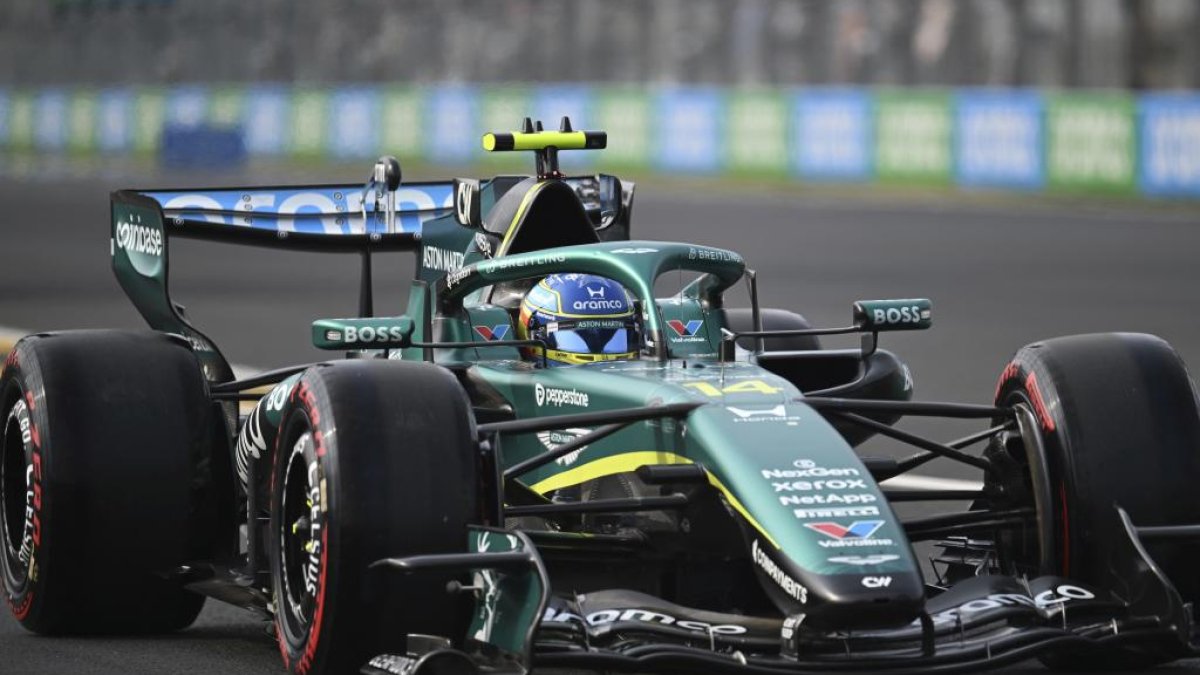
The FIA does not want the regulatory revolution of 2026 to be born lame. The governing body of Formula 1 has moved to prevent new engine manufacturers from becoming stuck in the pit of the grid, a measure that has its own name on the table, Honda. The partner of Aston Martinwho already suffered an ordeal in his previous return to the category, seems to be the main beneficiary of adjustments designed to guarantee competitiveness, something that is becoming really difficult for them.
Contents
The ghost of 2014
To avoid a repeat of the scenario of the previous hybrid cycle, where it took some motorists years to reach an acceptable level, the FIA has perfected the so-called ADUO system (Extra Development and Update Opportunities). This mechanism acts as a safety net for all-new power units. Currently, the data indicates that Sling is once again in a delicate position, with a development that drags lack of power and, what is more worrying, doubts about its reliability.
A sliding scale of aid
The ADUO system is not a fixed aidbut a sliding scale that rewards (or helps) those who are furthest from the reference engine. The logic is simple: the further behind a manufacturer’s V6 engine falls behind the best on the grid, the more flexibility it will have to work with. This is a disguised exemption from the spending limit and time restrictions in the simulatorallowing those who ‘go slow’ to run more in offices and workshops to close the gap.
The most recent development in the regulations is the expansion of these margins. Until now, the maximum aids were activated if the engine was 8% below the reference internal combustion engine (ICE) power; the FIA has raised that threshold to 10%.
But the support is not only technical, but also financial. Manufacturers who are in this critical performance step will have an additional allocation of 8 million euros for this year, in addition to extra test bench hours. It is, in essence, an economic ‘wild card’ so that Honda and Aston Martin do not begin their adventure with their hands tied by the strict spending ceiling.
Free bar of hours on the test bench
For Slingenter this new ‘intensive care zone’ of the regulations is a vital technical oxygen ball. Those manufacturers that certify being 10% or more behind the best engine They will receive a bonus of 230 extra hours on the test bench.
At an operational level, the FIA has divided competitiveness into five categories. The eThe existence of this fifth level (the most extreme) confirms that the international organization is aware that there is a motorist (Honda) who is suffering a real ordeal with reliability and performance. Without these additional hours of testing, the risk that Fernando Alonso will find himself in 2026 with an uncompetitive engine would be almost a certainty.
Canada, the key date on the calendar
The implementation of this aid has not been free of political tension in the offices. After the cancellations of Bahrain and Saudi Arabia, the ADUO review schedule became a battlefield. While Mercedes pushed to delay the exams until Monaco, the FIA has set a middle point: the first official review will be after the Canadian GP (the fifth round of the year).
There will be two more windows to evaluate who needs extra ‘oxygen’: the second review ahead of race 11 and the last one will remain after the 18th Grand Prix