













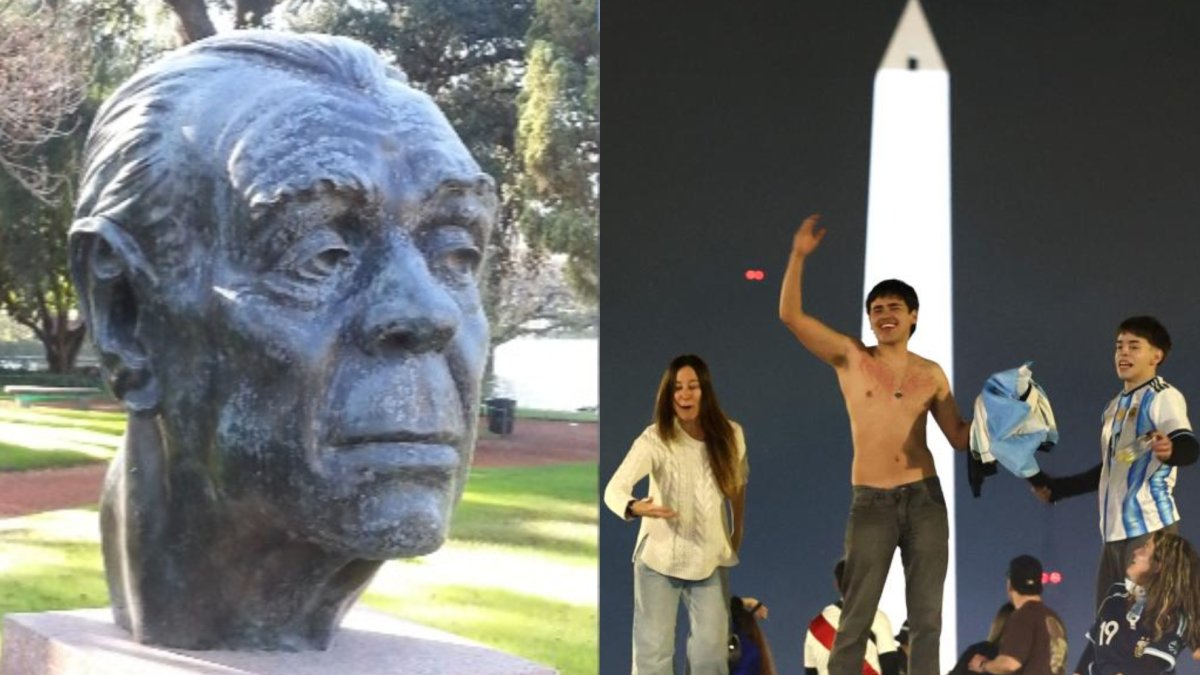
I don’t know what position he will occupy today Jorge Luis Borges in the Argentine pantheon of fame. It doesn’t matter much either. He June 2, 1978 -write down the date- he said that he hoped to die in body and soul, that he was tired of everything. Of himself, his name and his fame. But that’s up to you: There are millions of us who have understood the meaning of your phrase. “Let others boast about the books they have written, I am proud of the ones I have read” after reading to him. That he didn’t have the Nobel It is also a problem of the Nobel Prize. For years now, the blind master, as if he were a character in his works, has stopped weaving endless labyrinths, infinite libraries, books of sand, immortals who have forgotten themselves and finding places from which the present, the past and the future can be seen. But His books continue to speak for him.
Borges was, is, the modern master of the parable, of the paradox, of the metaphors contained in them. Maybe that’s why it might have made him smile, slightly, the fact that today part of the memory we have of him resides in something that makes him a character in his own narratives, ones that have that subtle humorous veneer that Don Jorge Luis administered in the manner of those who truly understand humor: he did not point it out, he included it so that the reader could identify with it.
Messi and Argentina, to the final
Argentina has incorporated football into its social idiosyncrasy. Already Jorge Luis Borgesicon and image, also, of Argentina, He didn’t like football. At some point, like that June 2, 1978, he seemed the only one. Or the only one who dared to say it out loud. It is often said that Borges ‘did not understand’ football. But not. Actually, Maybe Jorge Luis Borges didn’t like football precisely because he understood it.a, like so many other things, very good. From the bottom of your blindness He saw things with great clarity and, regarding football, he demonstrated it how many times he spoke about the phenomenon. But, like Borgesian paradoxes, it is to his pen that we owe the having identified ‘modern football’, that calculated combination of business and propaganda, several decades before its birth. It’s the story’That’s Percipi’ (to be is to be perceived) that Jorge Luis Borges wrote together with Adolfo Bioy Casares. Follow this link, read it and comment on it.
No: to Borges He didn’t like football, and on two levels: the entertainment level and the sociological level. It seemed childish and boring to him. “Football is popular because stupidity is popular,” he said. “Eleven players against eleven others running after a ball are not particularly beautiful.” Little more needs to be said: If you don’t like something, you don’t like it. But the second aspect, the sociological one, is what shows that he did understand perfectly the process of popularizing football. He said, for example, “football awakens the worst passions. Awaken above all that is worse in these times, which is nationalism related to sport, because people think they are going to watch a sport, but that is not the case. The idea of one winning and the other losing seems essentially unpleasant to me. There is an idea of supremacy, of power, that seems horrible to me.”. Read this sentence and now see the fans with national or local colors. To Trump and Infantinor, or Argentina, Spain, Qatar, Italy, Russia and others, at the time, organizing world cupsand tell yourself if it makes sense or not. To this sentence refers what happenedThe only time Borges went to football. He attended with his Uruguayan friend, Enrique Amorim, an Argentina-Uruguay match. Out of courtesy to his friend, he wanted a Uruguayan victory. Amorim, the same but in reverse. Both left at halftime because they believed the game was over, and they never found out the result.
Don Jorge Luis also dared to tell the great open secret of football: that In reality, football is irrelevant to his popularity and what really counts is that passion to win and avoid defeat: “Football itself is of no interest to anyone. People never say ‘What a nice afternoon I had, what a nice game I saw even though my team lost‘. He doesn’t say it because the only thing that matters is the final result. “People don’t enjoy the game,” and completed the sentence by referring to the insanity of the passion to subordinate everything to victory: the ‘anything goes’ for her.
In the end. That June 2, 1978 Borges gave a lecture on immortality, one of the axes of his literary production. It would be of little relevance if it were not for the fact that 15 minutes earlier, the Argentina 1978 Soccer World Cup had begun and the country was paralyzed watching its team play against Hungary. That conference was his cry of rebellion. There was no lack of audience… and neither a television that, placed on the stage, somewhat further back than the teacher’s table, broadcast, without sound, the meeting. Borges, blind Yeah, he didn’t mention it. It was considered mockery but from whom? Because It was also said that the idea came from Borges himself, in the embodiment of one of its paradoxes and labyrinths.
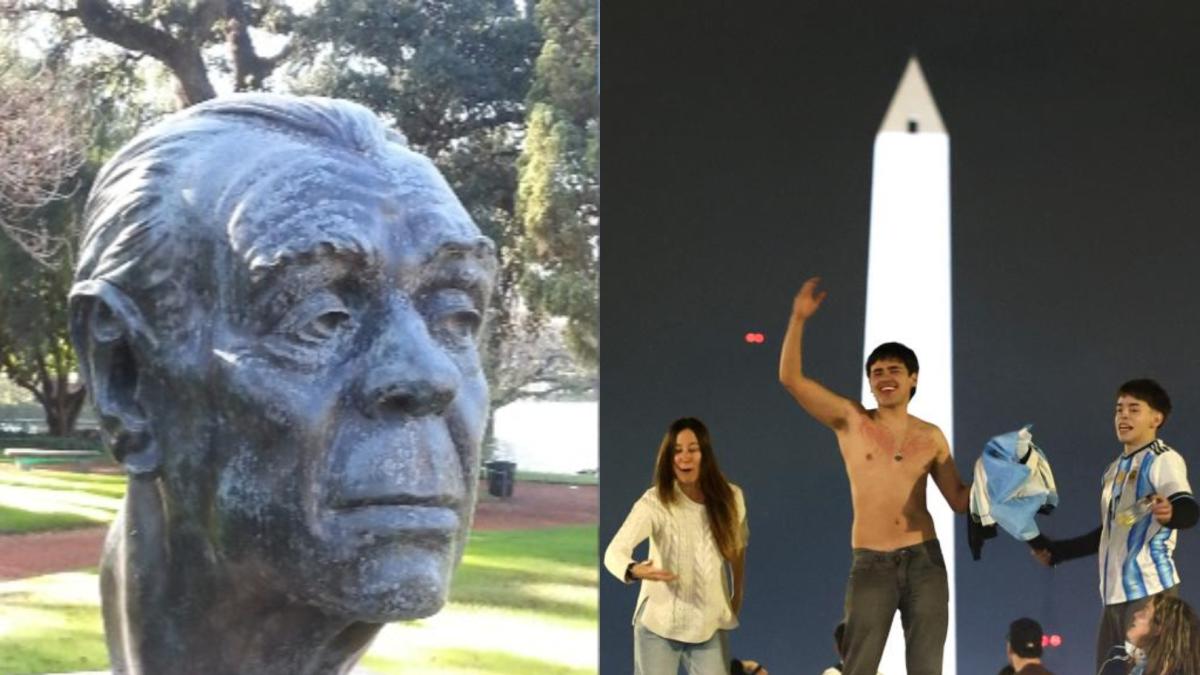
In the end. Argentina plays the World Cup final on Sunday and it is against us. before and after That invention of the devil that is social networks will allow people who do not deserve to have a voice to have it and use it to insult and denigrate. They are the things that over the years have adhered to football and that, as Don José Luis said and in another way Loquillo, They are the basis of the businesseither. But if at any time you feel saturated – I speak from this side – remember that Argentina is also the country of Borges, Les Luthiers and Soda Stereo. As for the match itself, I leave it in the hands of my MARCA teammates.
PS: Particularly I tell you that the Spanish boomersthose of us who watched the 74 World Cup without Spain, the match against Brazil from the 78 World Cup, and Honduras and Northern Ireland from the 82 World Cup, the 2010 World Cup It seemed to us as impossible as traveling to Pluto and back. And that group, except for the usual two or three, We are very grateful to Luis de la Fuente and yours, no matter what happens on Sunday.