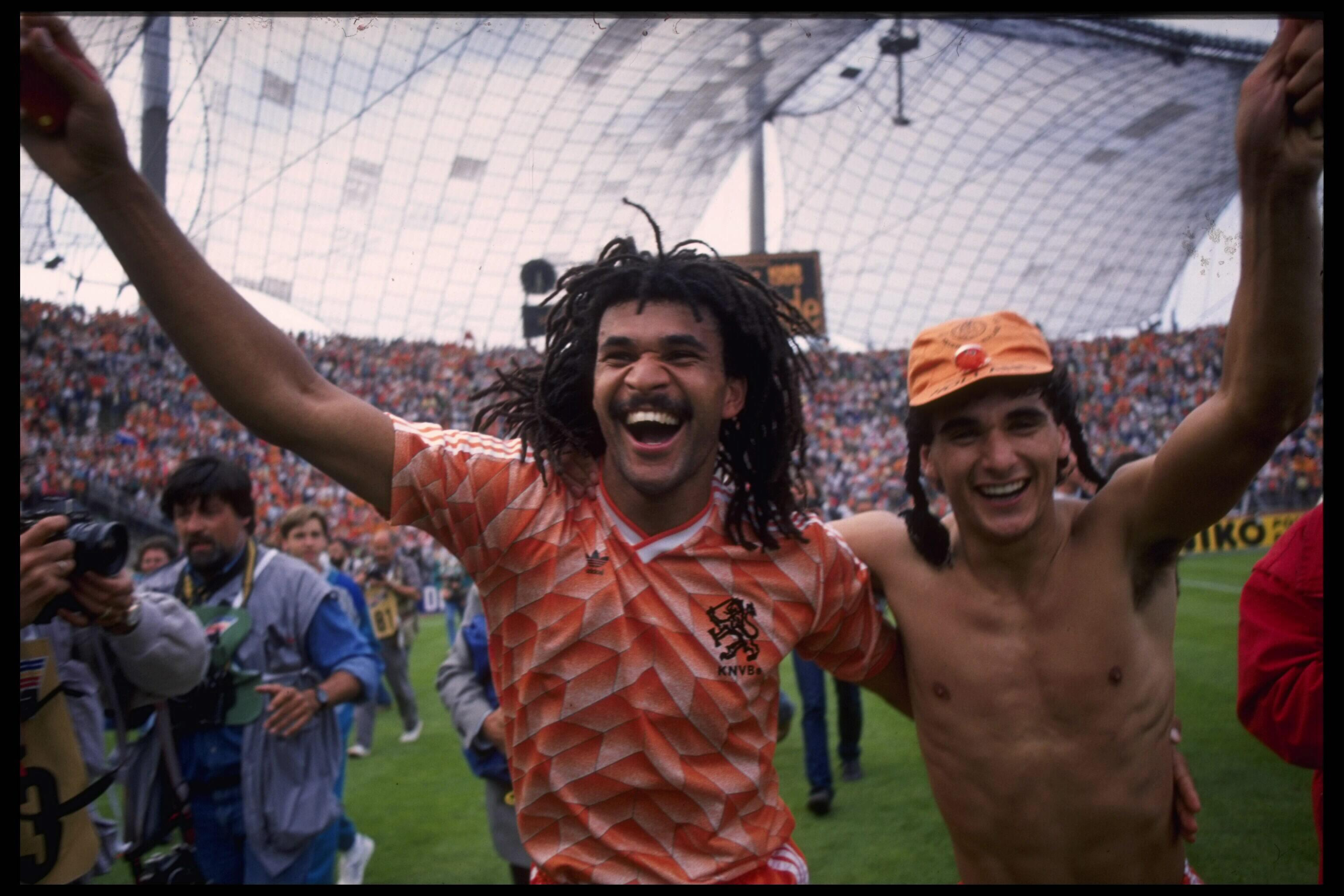
Ruud Gullit (Amsterdam, 1962) maintains his imposing physical presence – 1.91 – but he left behind those curls that he shared with Frank Rijkaardhis childhood friend in Oud-West, a multicultural neighborhood in the Dutch capital. Both, together with the elegant Marco van Bastenthey formed the backbone of the great Milan and the Dutch team that amazed European football in the second half of the eighties of the last century. Now is in Madrid, as a member of the prestigious Laureus World Sports Academy since 2017.
ASK. Next week the Champions League semi-finals begin. Which team do you see as the favorite for the title?
ANSWER. In recent years I have always been a Bayern Munich fan; They play really well. I also like Paris Saint-Germain. So I think the winner will emerge from that intersection.
Q. What if we talk about the World Cup?
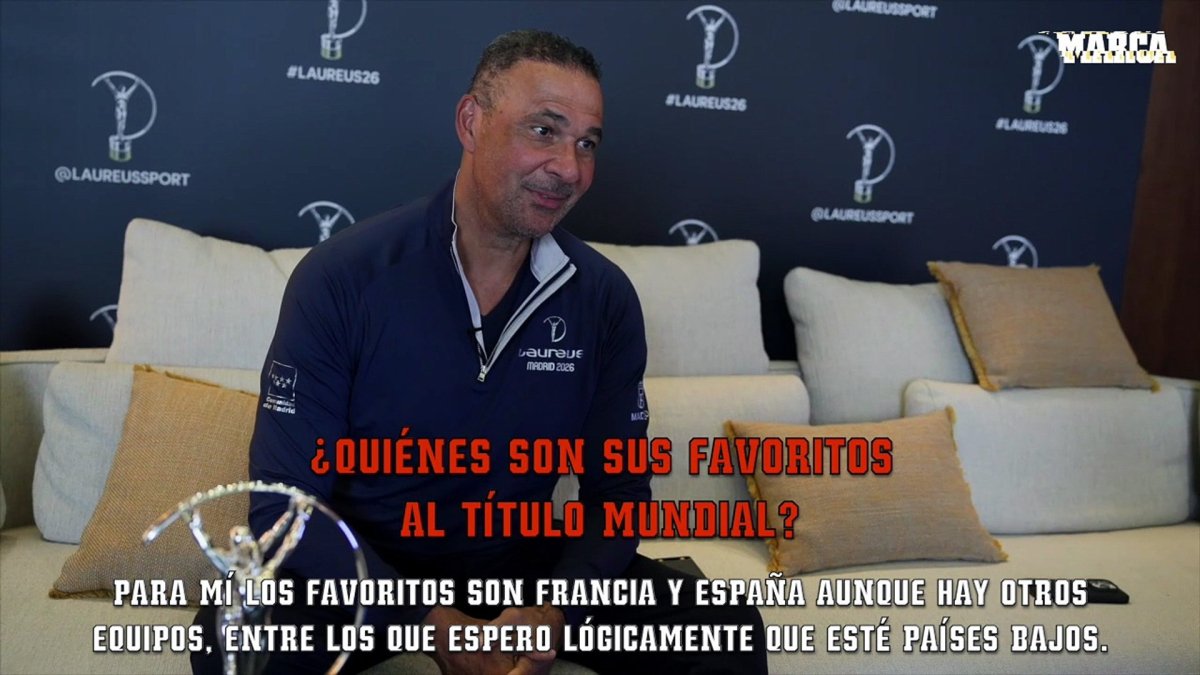
R. For me the favorites are France and Spain although there are other teams, among which I logically expect the Netherlands to be.
For me, the favorites for the world title are France and Spain. I really like Argentina’s winning mentality but it is very difficult to win two consecutive titles
Q. This World Cup is in America. What chance do you give to Argentina and Brazil?
R. Argentina is always there but it is very difficult to win twice in a row – only Italy (1934-1938) and Brazil (1958-1962) have done so. I really like their winning mentality but if you ask me what I think, I repeat that Spain and France are the big favorites.
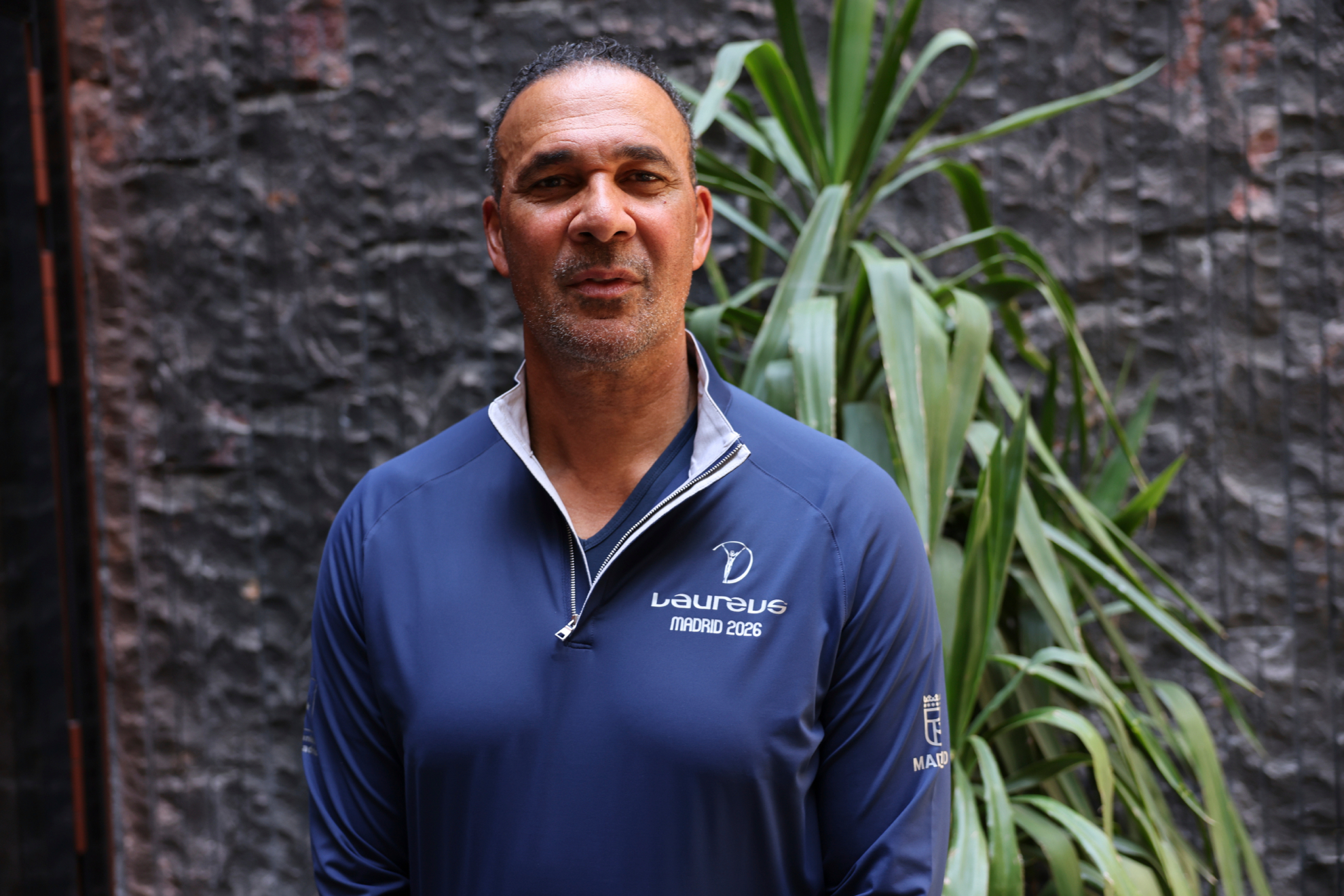
Ruud Gullit poses for MARCA after the interview.ALBERTO IBÁÑEZ
Q. If we think about that tournament, who is your favorite player?
R. Lamine Yamal, of course, is fantastic. I also like (Harry) Kane, you know, he scored a lot of goals. We’ll have to see if he can do it with England, I don’t know. I like Pedri, of course, and it will be fantastic to see Messi and Cristiano Ronaldo play in the World Cup again. Mbappé is also going to do very well. Yes, I really want to see it. There are many good players!
Q. Mention Pedri. Do you like it that much?
R. Look, I don’t think there are many players who have the same thing. The most important thing is not that you are a good player, but that you have the work ethic of a good player, and he has it. He works a lot in the midfield. That’s why I like it so much. It’s not just about what you do with the ball, but what you do especially when you don’t have it.
It’s not just about what you do with the ball, but what you do especially when you don’t have it. That’s why I like Pedri so much
Q. Many people think that the player most similar to you today is Bellingham. What do you think?
R. Bellingham is a little more static and that’s why we play a little different football. I think he has had a similar situation to mine with his injury – Gullit had serious problems with his knees, especially his right one. Coming back from an injury like this can be difficult because everyone wants you to get back to your previous level. He was also unlucky because the first year he arrived he scored a lot of goals but then there were a lot of changes in the team and suddenly he couldn’t do the same thing as before. He likes to be more offensive, but for various reasons he can’t anymore. And it’s not just his fault.
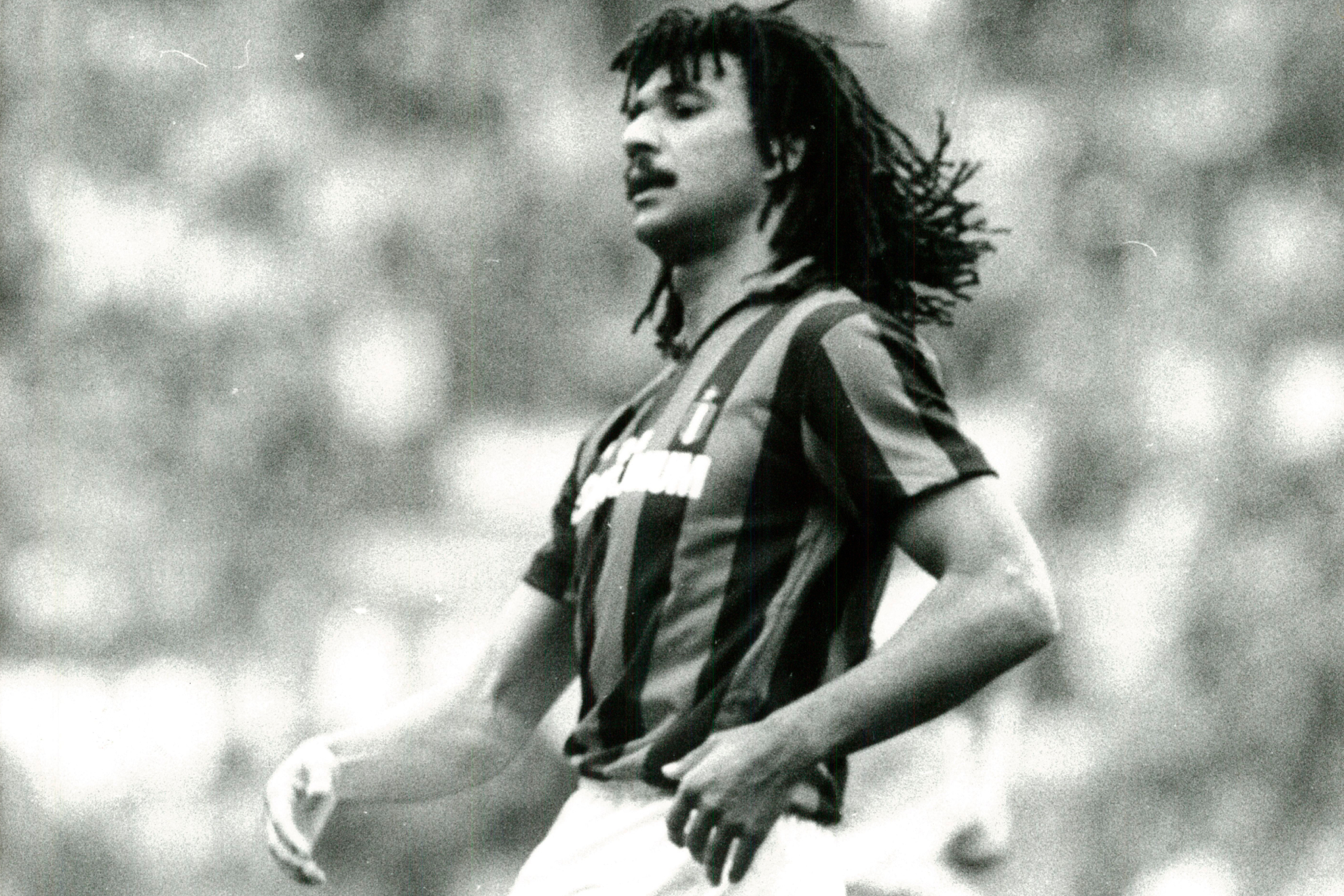
Ruud Gullit with the Milan shirt during a match.LUIS GABRIEL/BRAND ARCHIVE
Q. When you won the Ballon d’Or in 1987 you dedicated it to Nelson Mandela, who was imprisoned at the time. Do you think racism is still a serious problem that is reflected in football?
R. There are many things happening in the world. I remember when I dedicated it to Mandela, people from the ANC (African National Congress) came up to me and said, “You’ve made your point. Don’t go around talking about this. Because the only thing you can do for us is play well.” And nowadays it is very dangerous for athletes to talk about politics, because it will haunt you for the rest of your career. That’s why I understand that players stay a little bit on the sidelines and say: no, I can’t get involved in that.
Nowadays it is very dangerous for athletes to talk about politics, because it will haunt you for the rest of your career. That’s why I understand that the players stay a little on the sidelines
Q. You played for Milan and Sampdoria so you know Italian football well. What’s wrong with him?
R. In my opinion, I think they have lost their essence. An Italian is very proud. His image is everything and he defends it at all costs. That’s why his defense was always the best. The last time they won – Euro 2020 – was with Chiellini, Bonucci and a good goalkeeper. And now, I no longer see the defenders they had. That doesn’t mean you have to stick to the goal, no. But you need to know how to defend.
Italy has lost its essence. An Italian is very proud. His image is everything and he defends it at all costs. That’s why his defense was always the best. The last time they won – Euro 2020 – was with Chiellini, Bonucci and a good goalkeeper
In our time, everyone talked about Sacchi’s Milan, how great we were and all that. But we practiced defense almost daily, not attack, how to recover the ball. And that is something that they have forgotten a little. I think they have focused on modern tactics, that you have to attack, play and all that. And it only works when you have a good defense. So I think they have to go back to their essence. You don’t have to play catenaccio, but you can play something in between.
Q. Barcelona and Real Madrid complained a lot about the refereeing in their last Champions League qualifiers.
R. They always do it.
Gullit celebrates with a teammate the Netherlands’ victory in the 1988 Euro Cup.Getty Images
Q. But do you think they were somewhat right?
R. Look, they have nothing to complain about. Both teams in the past have had refereeing performances that have favored them and now they had them against them. That’s part of life and football. That’s hard to understand and I understand it. Camavinga’s red card was tough, but it was also stupid on his part. He gave the referee every opportunity to do so. And Barcelona’s two red cards were clear, sorry. The VAR left no room for doubt.
Camavinga’s red card was tough, but it was also stupid on his part. He gave the referee every opportunity to do so. And Barcelona’s two red cards were clear, sorry
Q. Real Madrid is close to a second season without titles. Where is the problem? Perhaps the departure of Kroos and Modric has hurt them a lot…
R. I think in those days they played much more as a team and now I see that they rely more on individual talent. They are still strong and their players have technique and presence, but they face opponents who work harder, so you can get into trouble. Another example is Barcelona, which also plays in its own style, with a very advanced attack that leaves a lot of space behind. And they always get caught, always. So, therefore, they are two different styles, but with a risk. And then they play against teams that play very hard and everyone runs a lot. And then you have the chance to beat them.
Football is not honest and it is not always fair. Sometimes you play better, but you still lose and you have to accept it. And you also have to be humble in your defeats
If you look at Atlético, they play better against very strong teams. Because? Because it adapts to them in a practical way. Sometimes you think that the opponent was much better, but they won the game. In the Cup final they played against a team that was doing the same thing as them, and they lost. Football is not honest and it is not always fair. Sometimes you play better, but you still lose and you have to accept it. And you also have to be humble in your defeats. And it’s difficult for many teams because it’s hard to digest when you play better and don’t win.
Q. Only one footballer, Lionel Messi, has won the Laureus as best ‘international male athlete of the year’. Does that seem fair to you?
R. The truth is that it is something I don’t give much importance to. In fact, I like to see that athletes from other sports such as athletics, tennis, gymnastics or Formula 1 are rewarded.
Yamaha outboards are renowned for their impressive speed and performance on the water. Whether you’re looking for a powerful engine for fishing, leisure cruising,...
7 Shocking Facts About Yamaha Outboard Motor Prices in 2025 Meta Description: Yamaha outboard motor prices range from $1,000 to $55,000. Complete 2025 pricing...
ss=”rank-math-highlight” style=”background-color: #fee894″>Linda Noskova from the Czech Republic pulled off an impressive upset to secure her place in the semifinals of the prestigious Bad...