














The image looked real. A young fan cheered on her team from the stands. Thousands of users shared the video, commented on its beauty and searched for its identity on social networks.. The problem is that that fan was never in the stadium. In fact, it didn’t even exist. This is just one of the examples that the 2026 World Cup is leavinga tournament in which artificial intelligence has become a dangerous tool capable of influencing public conversation in real time.
In times of fake news, these people are only trying to cause harm and promote hatred
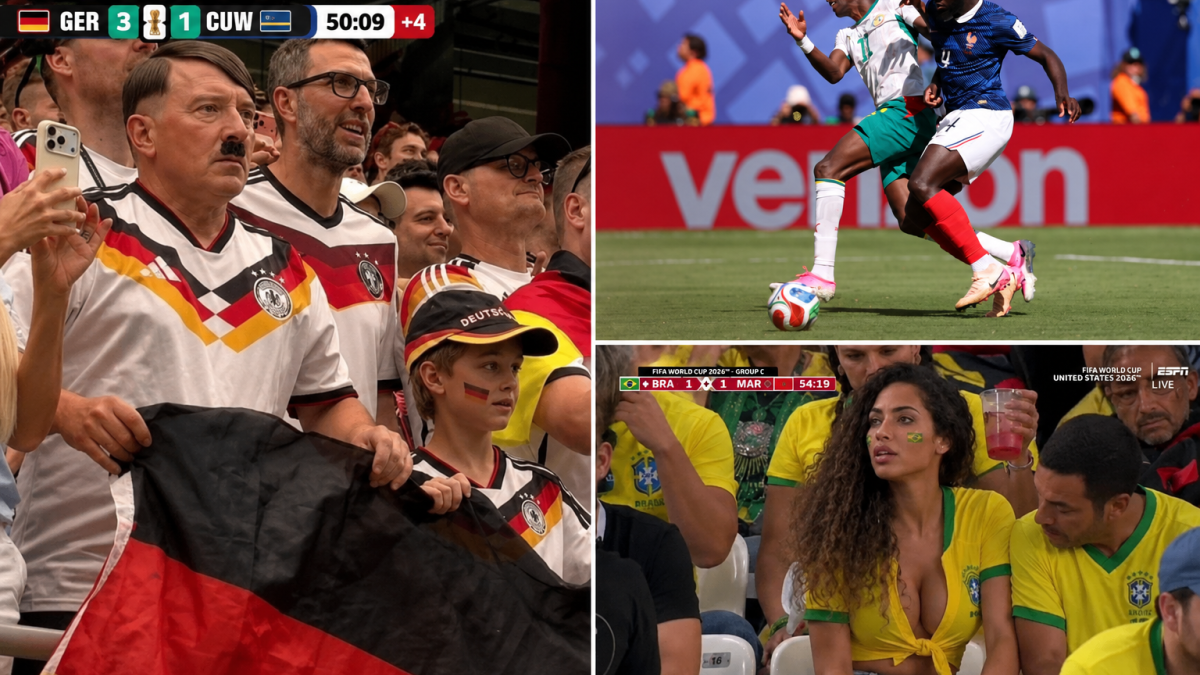
The character was linked to the account Chiara Cleoan influencer generated by AI… although in her description she defines herself as a 23-year-old girl from Miami, but she does not warn that she is created with artificial intelligence. The original video reached almost 40 million views.
The fans that never existed
One of the most viral phenomena of the first weeks of the World Cup have been the videos of supposed female fans in the stands. Young women, with t-shirts from different teams, who accumulate millions of views on all social networks. The images seem authentic, enough for thousands of users to comment, share and ask about the identity of the protagonists. However, Behind these characters created using artificial intelligence, lies the real danger. In some cases, these publications appear on accounts that monetize the attention gained during the World Cup. In others, profiles that redirect to adult content platforms or commercially exploit virtual influencers.
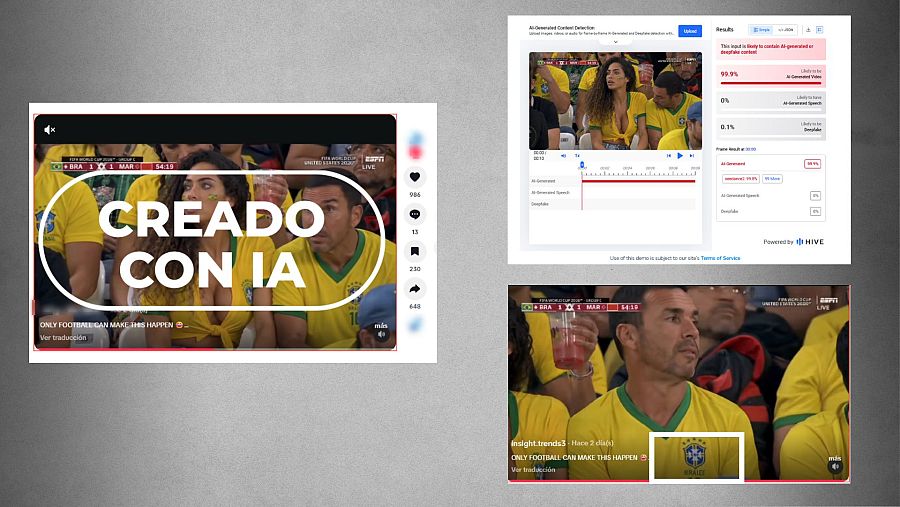
On the left, the publication that spreads the video created with AI; On the right, the evidence.
The risk goes beyond occasional deception. Experts warn that these tools are normalizing the presence of fictitious people in information and entertainment spaces without many users being aware of it. Unlike traditional montages, the new AI-generated images do not seek to appear extraordinary. They try to appear normal. The process is usually always the same: An image or video generated by artificial intelligence goes viral, the account gains followers and subsequently monetizes that attention. The problem is that many users believe they are interacting with a real person. They comment on their posts, follow their profiles and even They pay subscriptions to access exclusive content without being aware that the character they are following has been created by computer.
Irreparable damage
A manipulation that does not only affect images. During the match between the United States and Australia, an audio attributed to the DSports narrator began to circulate Leandro Zapponi. In it he was heard making a racist comment (“And who is this black woman?”) about the singer Ciara, present at the stadium. The fragment quickly went viral and provoked a wave of criticism. Hours later, the journalist had to come out to publicly deny it. But the damage, irreparable, had already been done. “In times of fake news, these people only try to cause harm and promote hatred. Audios modified by AI that are not funny. It is sad to have to clarify that I never said and would never say something like that”he denounced. The recording seemed authentic. The voice was his. The tone too, but the audio was fake.
The case reflects a growing concern in the world of communication. Voice cloning tools are becoming more accessible and accurate. With just a few seconds of public recording they can generate apparently real statements capable of deceiving even listeners accustomed to hearing a person every day. He wasn’t the only one. Another episode involved journalist Nicolás Haase, to whom they attributed a phrase intended to cause harm (“For now, 0 for France, 0 for ‘Senegral’… Both African countries tied…”). However, in the original DSPORTS broadcast, during the match between France and Senegal, the narrator said: “Zero for France, zero for Senegal. Group I of the World Cup. We, to the break and here we come.” An analysis carried out with the Hiya tool determined that there was a 98% probability that the viral audio was generated with artificial intelligence.
The fake Hitler fan
Another of the most viral contents of the World Cup emerged during a Germany match. One image showed a spectator with a striking physical resemblance to Adolf Hitler among the fans present in the stadium. The photograph spread quickly and racked up millions of views. The controversy was served. However, when the original broadcast was reviewed they discovered that that fan never appeared on screen. The image had been digitally altered from a real audience shot. The case summarizes one of the most frequent strategies of current disinformation. You don’t always make up a complete scene. Often an authentic photograph is used and a specific element is modified to light the fuse.
Not all the misinformation detected during the World Cup is generated with artificial intelligence. Sometimes it is enough to exaggerate a true story. The selection of Cape Verde became one of the surprises of the tournament after its draw against Spain. The result aroused sympathy around the world and stories about his players quickly began to circulate. The main protagonist was the goalkeeper Vozinhahero of that match.
Messages appeared on social networks claiming that he was an electrician, a bus driver or that he combined football with different jobs to be able to get to the World Cup. The story fit perfectly with the narrative of the small country that challenges the great powers of football. The problem is that it wasn’t true. Vozinha, now in the Portuguese second team, has been developing a professional career for years and has played in different countries over the last two decades. Some real stories about other Cape Verdean footballers ended up mixing with rumors and false data to build a version much more attractive than reality.. It is a less obvious form of disinformation, but equally effective.