

















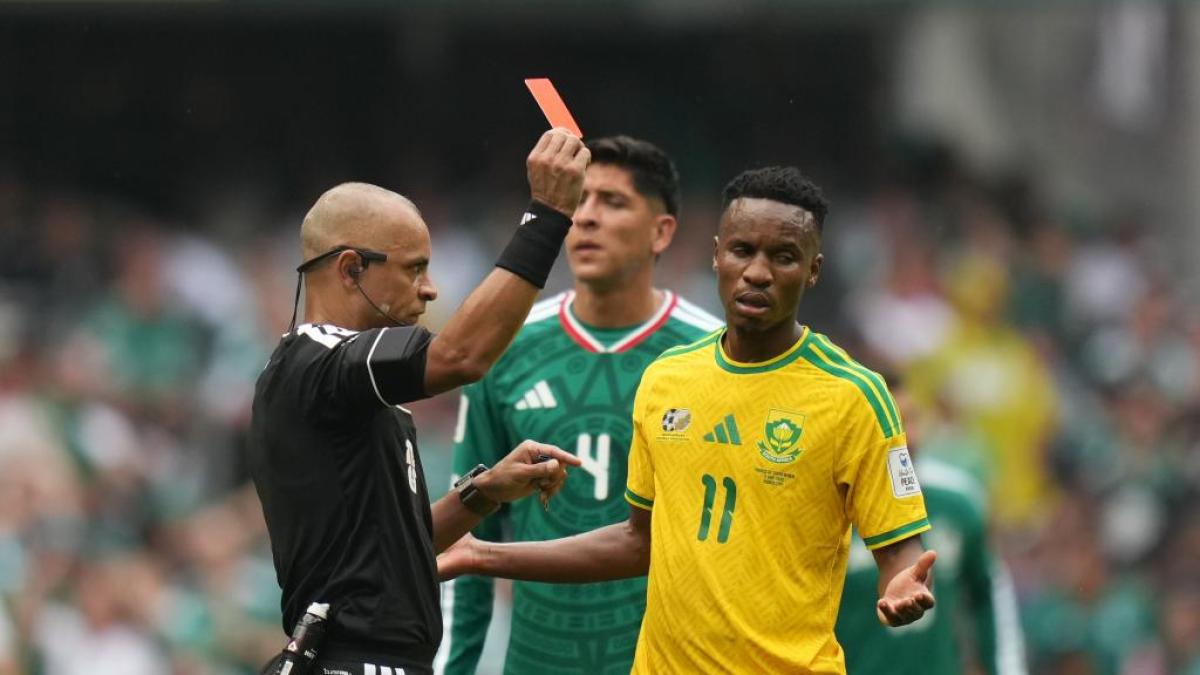
Seven World Cup matches have been identified as suspected of possible fixing linked to bets on the Copenhagen Groupan independent international network dedicated to detecting, sanctioning and preventing the manipulation of sports competitions.
Although it is not public yet, The Council of Europe has made a brief preview just after FIFA issued its own study in which it had detected no suspicious movements.
The one from Copenhagen already saw it from the first game with the red card shown to South African Themba Zwane. The seven warnings are yellow (slightly increased alert), while there are orange (increased alert) and red (maximum alert). This implies that there may be reasons outside of fixing that explain what happened, “unexplained fluctuations in probabilities, rumors on social networks or information from the source”, for which this Group has requested more information from FIFA.
The most striking is the one on the front Florain Balogunfrom the USA and who, against all odds, played in the round of 16 match against Belgium when the red card sanction was lifted. The American cryptocurrency-based prediction market, Polymarket, opened a market on July 2 asking, three days before it was forgiven: “Will Folarin Balogun play against Belgium?”, a situation that was not repeated with the other 14 sanctioned with a red card, which raised suspicions.
Likewise, the same Polylarket market received 4.8 million dollars in bets that Spain would not defeat Cape Verde in their group stage match, which ended in a goalless draw.
Likewise, the three and a half minute delay of the video assistant referee (VAR) team is being studied with a yellow alert. to cancel out a goal by Spain’s Ferran Torres in a 4-0 win over Saudi Arabia.