




















The day had begun in one of the French temples of motorsport. The peloton left the Nevers Magny-Cours circuit with the promise of a fast stage and one last chance for the sprinters before the mountains once again claimed the spotlight. The road, however, was slow to accept the script. From the starting signal, there were attacks, cuts and attempts to form a breakaway with options.
Nobody wanted to give away meters. The teams of fast men monitored any dangerous movement, aware that the Montagny-lès-Buxy Hill, located just twenty kilometers from the finish, could become an open door for the most explosive runners. Among so many accelerations, Baptiste Veistroffer was one of the cyclists who insisted the most. The Frenchman managed to open the way alone and for several sections he acted as the visible head of a breakaway that never found much stability.
Behind, Soudal and Alpecin assumed much of the control. The difference always remained within manageable margins, while the wind increased the tension between the general favorites. Nobody wanted to be in a bad position in case the fans appeared. The high pace and constant vigilance prevented the race from really entering a calm phase.
The rain later added another ingredient to the day. About 80 kilometers from the finish line, a strong storm of water fell on the peloton after several days marked by extreme temperatures. The asphalt became more delicate and concentration became even more important. The breakaway, already reduced, was losing members until it was condemned by the work of the teams interested in the sprint.
Jonas Vingegaard also had his little moment of trepidation. The Dane suffered a mechanical problem and had to stop to change bikes. The intervention of his colleagues was immediate. Campenaerts accompanied him in the chase and the Visma leader returned to the group without relevant consequences. There was no battle between the candidates for yellow, who reserved their strength for the decisive days that await ahead.
Everything seemed to be heading towards a routine capture and conventional launch until Lidl-Trek decided to rebel against logic. 35 kilometers from the finish, Quinn Simmons attacked violently. The American was not just looking for an individual adventure. His move was part of a broader offensive by his team, willing to tighten the race to eliminate sprinters and favor the interests of Mads Pedersen in the fight for points.
The attack did damage. The stage, which until then had lived under relative control, was completely broken. At the head were riders of enormous quality such as Filippo Ganna, Mathias Vacek, Mauro Schmid and Davide Ballerini. The lead was around 20 seconds, enough to force the sprinters’ teams to spend early and cause many of their throwers to disappear from the top positions.
Lidl-Trek continued to hit. Simmons moved again on the last climb and Pedersen found the ideal terrain to punish his rivals. The objective was clear: avoid a clean sprint or, at least, get the fastest men to arrive without partners and with stiff legs. For a few kilometers, the ambush seemed to have a real chance of success.
The platoon, however, managed to close the wound. The collaboration of the teams interested in the massive arrival was extinguishing the movements, although the effort left an obvious consequence: five kilometers from the finish line there were barely any complete trains left. The riders were looking for a useful wheel, changing positions constantly and trying to survive a finish in which the usual organization had disappeared.
That territory belongs to Merlier.
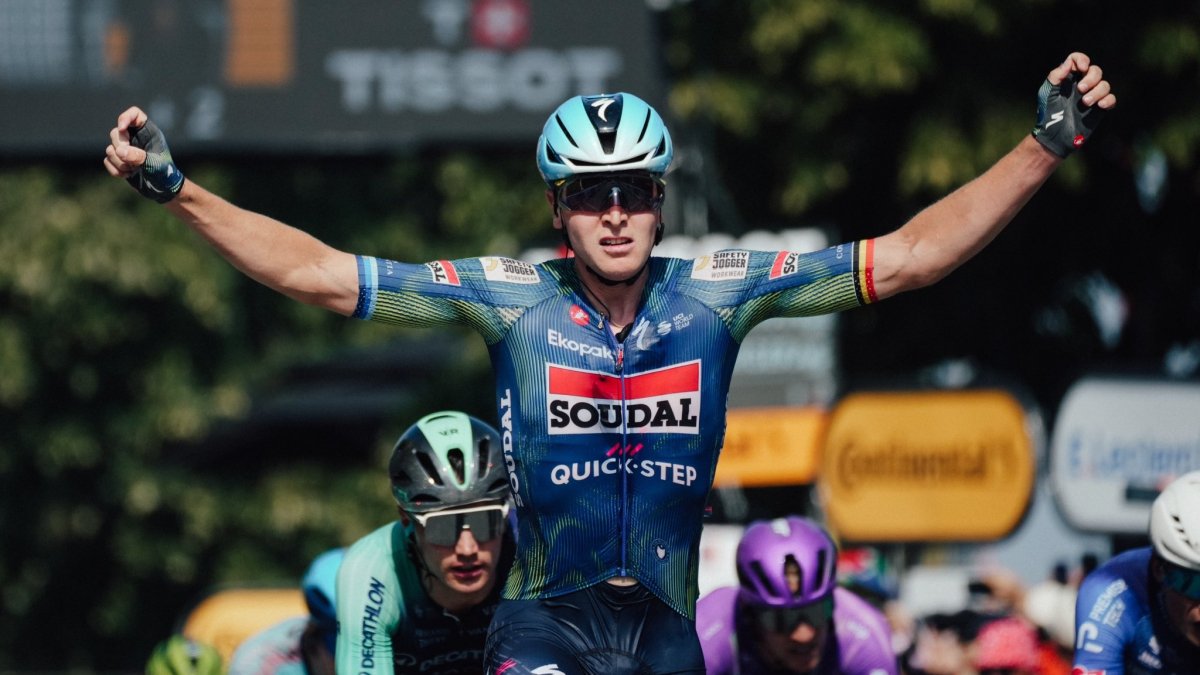
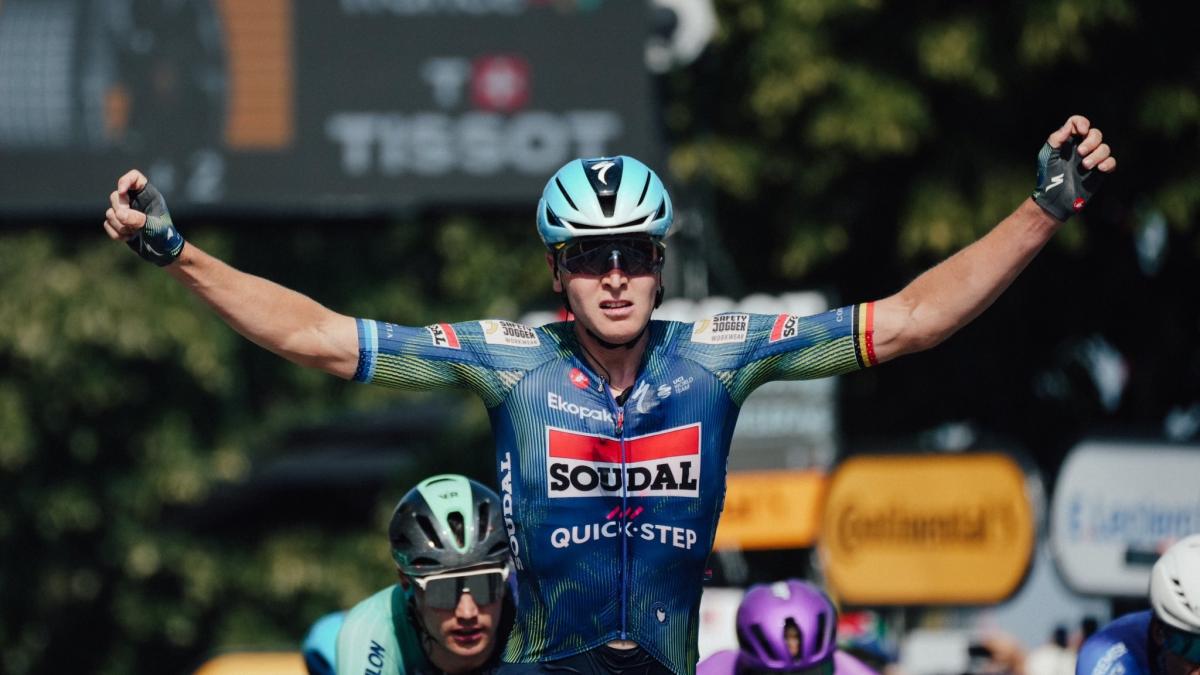
The Belgian did not need a perfect formation or a perfectly drawn final stretch. He waited for his moment, found the space and unleashed all his power when the goal was already upon him. After a nervous stage, wet and shaken by attacks, Merlier was the fastest in Chalon-sur-Saône and turned the disorder into a new victory.
Lidl-Trek did not manage to avoid the sprint, but it did transform a seemingly simple day into a frenetic battle. Simmons put on the show, Pedersen defended his interests and the sprinters’ teams had to work until the last meter. The biggest reward, however, ended up in the hands of the Belgian.
Behind, Tadej Pogacar completed the day without incident and kept the yellow jersey intact. The favorites made it through the last lull before the Tour once again looks towards the mountains. There will no longer be room to hide behind the sprinters’ trains. In Chalon-sur-Saône, meanwhile, Merlier once again showed that, when the peloton loses order, few find the finish line better than him.