













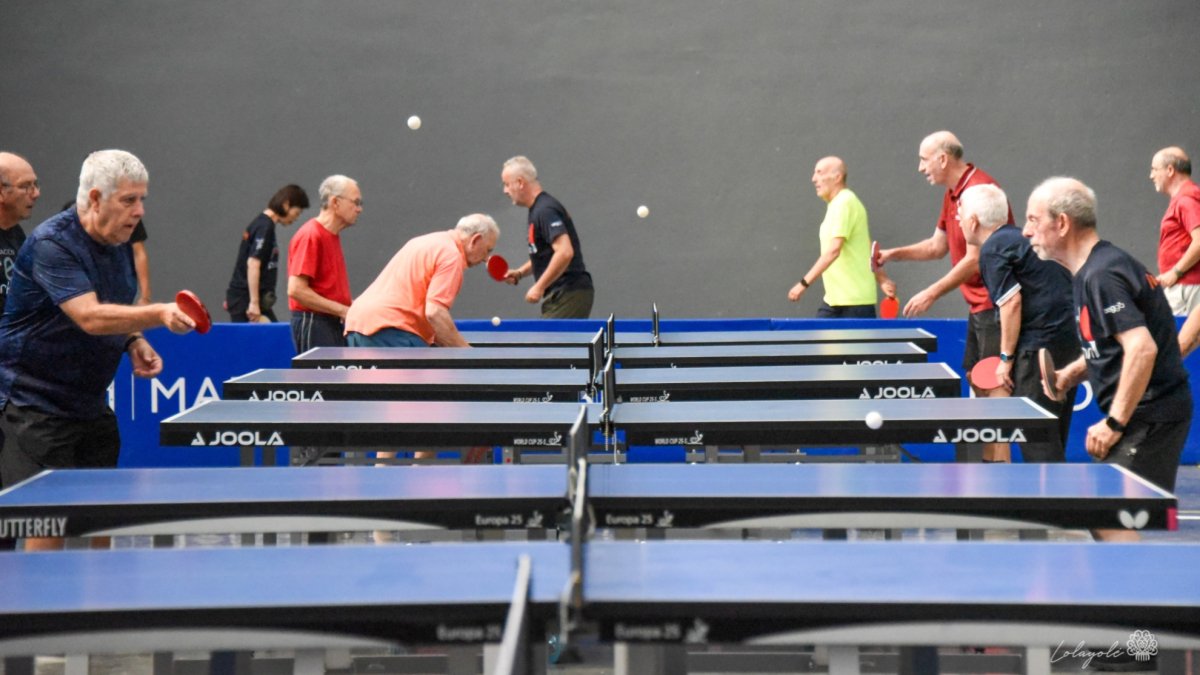
At the Triangulo de Oro Municipal Sports Center, In the Madrid neighborhood of Bravo Murillo, the silence is broken with a frenetic rhythm: click, clack; click, clack. At first glance, it looks like a conventional table tennis club training session. Concentrated players, active legs, feline reflexes and crossed shots. However, behind every blow there is a much bigger battle. At these tables you don’t just compete for points; one fights to regain control of one’s own body.
This is the headquarters of the Red Parkinson Foundation, a non-profit organization, where the speed of a small white celluloid ball has become the best therapy against a neurodegenerative diseasewhich affects more than 160,000 people in Spain; 20,000 in the Community of Madrid.
The neurological pill
“Everyone associates tremor with Parkinson’s, which is the main symptom, but there are other very marked symptoms such as loss of balance or coordination,” he explains. Javier Martínez, affectionately known as ‘Micky’, one of the center players.
Table tennis is wonderful for neurological rehabilitation.
Micky details mental speed that this sport demands. “When you are in front of a table and a ball comes to you, you have a second of time to think from what angle it comes to you. In that moment Our brain is working at a pace that is not accustomed to it. “It is wonderful for neurological rehabilitation.”
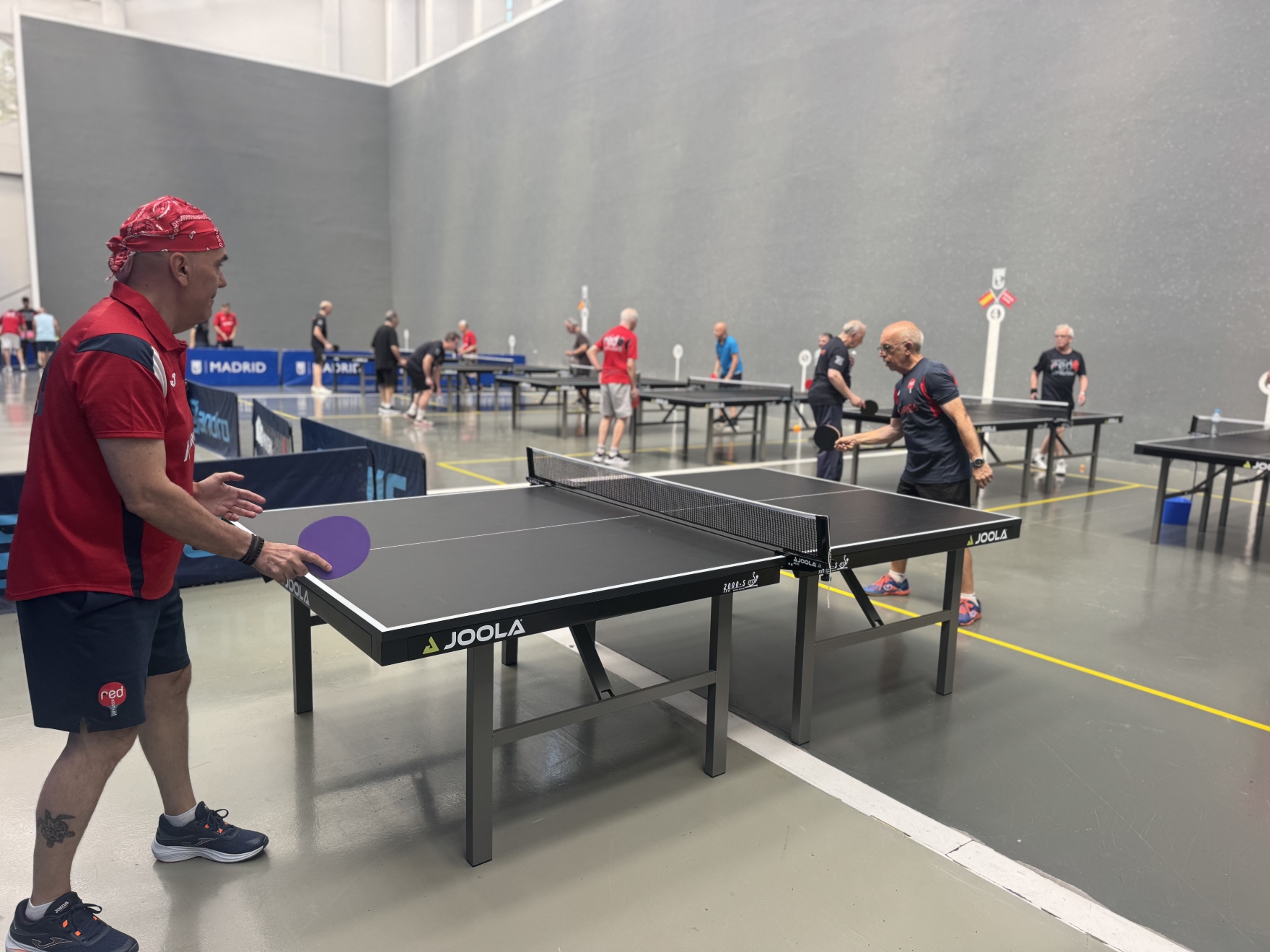
Javier Pérez, recent bronze in the doubles at the World Cup held in 2024 in France
Continuous training stimulates essential areas of the neural field. One of the characteristics of a Parkinsonian is the bradykinesiathe slowness of movements: “We are like a turtle, but here we learn to work with that slowness,” he adds. Trainers design specific exercises focused on balance and coordination, allowing patients to mechanize movements that they then apply in their daily lives, such as walking safely or moving more fluidly.
A shield against apathy and isolation
Beyond the undoubted motor benefits, the members of the Golden Triangle agree that The true lifeline of the Foundation is the psychological and social impact. The diagnosis of Parkinson’s usually brings with it ghosts such as domestic isolation and lack of initiative.
“We are very apathetic in the face of the disease,” confesses Micky. “You get out of bed and you don’t feel like doing anything, but the obligation to Coming to train changes you. You say: ‘Today is Monday, I have to play table tennis.’ That’s what encourages you to get up, go out, put on your tracksuit and come here with your shovel.”
“Your life can go from being on a couch watching TV to going to a World Championship.”
In this line, the great camaraderie among all members of the group. “Here we help each other; if one stumbles, it doesn’t matter which side it is, the partner jumps for him,” he explains.
Vicente Jimenez Navas reinforces that same idea of emotional transformation: “Your life can go from being on a couch watching TV to going to a World Championship. It is crazy that gives you joy, euphoria and gives you dopamine. The feeling I have when I come here is the same as when I was paid for a day at the amusement park as a child. “I already have a table in my house and I don’t leave it even on vacation.”
Towards a better quality of life
Ramon Velazquez, responsible for the physiotherapy program of the Red Parkinson Foundation, corroborates the medical basis that supports each training: “We are building a physiotherapy and therapeutic exercise model specific focused on maintaining autonomy, mobility and quality of life. The program combines adapted high-intensity exercise, strength work, balance, walking, coordination and cognitive tasks.” According to Velázquez, the objective is ambitious: “We want physiotherapy to stop being just a response to loss of capacity and become an active tool“: measure, prevent, train and monitor the evolution of the disease through a replicable model with assessment protocols.”
The biggest surprise for us is that on the first day we can already see the evolution
In front of the tables and controlling the sessions is coach Federico Dragopresident of District 20, who confesses his daily astonishment at the patients’ response: “The biggest surprise is that on the first day the evolution is already appreciated. They leave very happy and eager to return. Here we drive different speeds; An older person who has had the disease for many years is not the same as a recently diagnosed young person who retains high mobility. But everyone, From the beginning, reflexes improve a lot”. During the warm-ups, Drago insists on practical exercises: “We try to gain strength in the legs and coordination that will later help them, for example, when moving around the city.”
From therapy to the World podium
Although Micky Martínez laughs that qualifying for a tournament or winning a medal is the least important thing to him, because he prefers the benefit of socializing, the truth is that the competitive level of the Red Parkinson Foundation group is of an astonishing international level.
In the afternoons I was a different person, I went out with a completely different mood and physical state.
The clearest example is Javier Pérez de Abéniz. After starting to play table tennis four years after his diagnosis as an alternative without harmful impacts, he discovered that his body responded dramatically: “I realized that playing improved my condition. In the afternoons I was a different person, I went out with a completely different mood and physical state.” Just two years after picking up the paddle for the first time, he entered the World Championship in Germany, which is held among parkinsonians. and he won the silver medal. His record also includes the World Championships of Germany 2021 with a silver medal in class 2; bronze in Croatia 2022; in Greece 2023 gold in mixed doubles, gold in men’s doubles and bronze in class 2 and in France 2024 He achieved bronze in men’s doubles.
Table tennis slows down Parkinson’s symptoms and activates dopamine
“That experience even helped me write a book”says Pérez de Abéniz, author of ‘Los setbacks’. He is currently preparing for the next World Cup to be held this October in German lands and which will bring together more than 1,000 participants. His competitive philosophy keeps his feet on the ground: “First health, then fun, then competition. It’s harmful if you only think about competing.” The next World Championship among parkinsonians will be held next October in Shanghai, China.
The ’emotional salary’ of a limitless network
Behind the operation of this gear is the vision of José Antonio Alonso, founder of the Parkinson Networkwho took “the blanket over his head” just a year ago after observing the tremendous loneliness that patients suffered. “We studied what could be done after the diagnosis and we saw that it was shown that table tennis activates everything that the disease affects: mobility, balance, reflexes… because it slows down symptoms and activates dopamine. The problem is that there were no specific sites that promoted this. So we decided to put them on ourselves.”
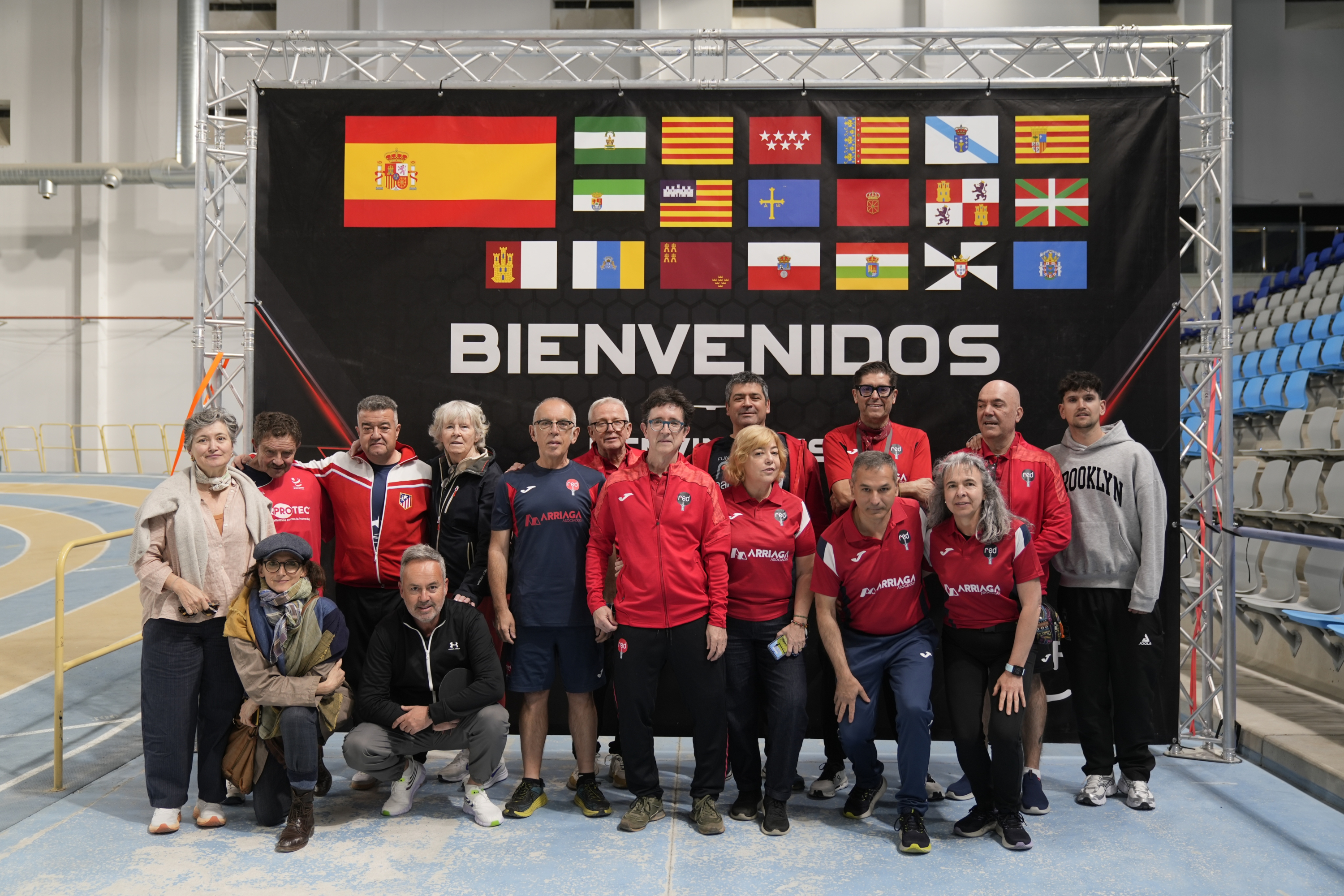
The team during the Spanish Championship held in Antequera.
The response has been overwhelming. out of nowhere, This Foundation already has three headquarters (they train Monday and Wednesday in the Golden Triangle and Tuesday and Thursday in San Sebastián de los Reyes), coordinate 50 players, with a forecast of reaching 70 in September, and the next step is to officially establish itself as a federated club. “Starting in September they will compete as a clubbecause now they do it on an individual level,” reveals Alonso.
What I want you to see is that there is life after diagnosis.
For the founder, The involvement of public institutions is “capital and essential” for the transfer of spaces like the one provided by Alejandro, the director of the Bravo Murillo sports center. The growth of the organization responds to a vital need: “There are people who take more than an hour to travel here to train, with how difficult it is to move with this disease. That is why we want to expand the network to Coslada and other points in Madrid, so that they do not have to travel such a distance. They are also asking us for collaborations from other provinces”. Regarding a future plan, he assures that “it will be a network. We will go little by little and with common sense, because patients come first.”
Alonso smiles when he sees the pavilion full of activity and summarizes the driving force behind his effort in an impeccable concept: “It’s incredible when a family member comes and tells you that their partner, their father, or their brother is someone else, that they laugh again and want to leave the house. What I want them to see is that there is life after the diagnosis.” In addition to table tennis, they share other activities such as hiking, even dancing to also enjoy moments with their families.
A life that, for this dedicated team of shovel gladiators, passes at breakneck speed, from table to table, and winning, point by point, the game against Parkinson’s.