





















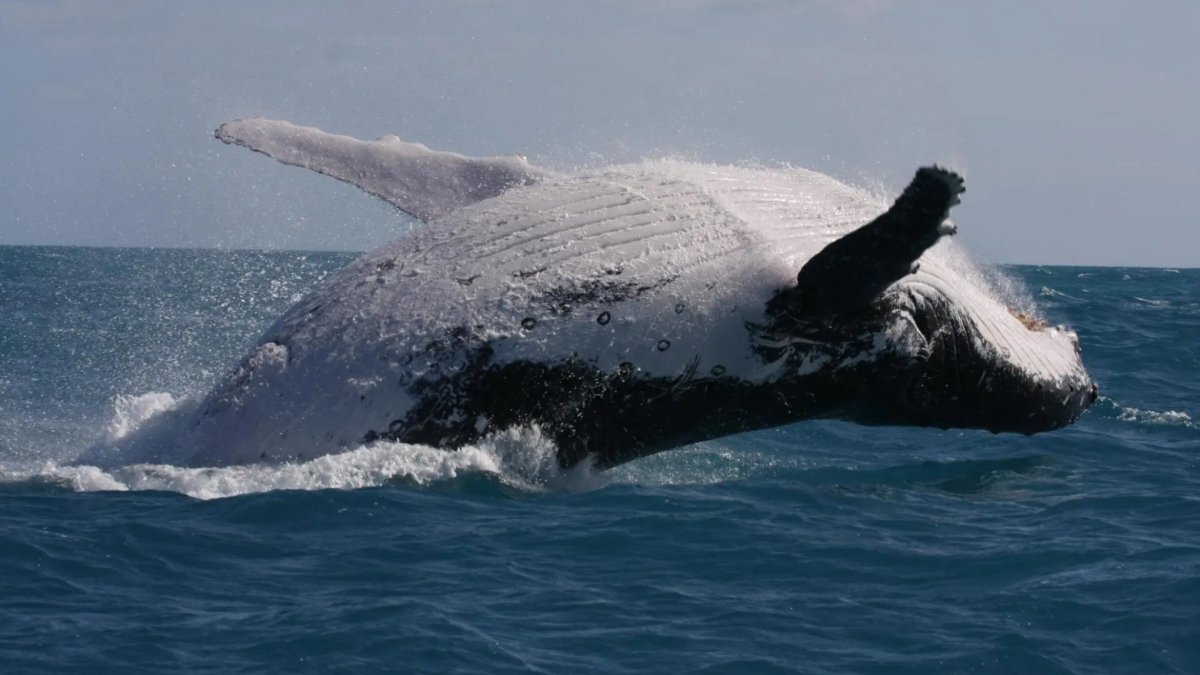
A sighting has surprised the scientific community and marine conservation teams. What started as a routine cetacean monitoring expedition ended with the confirmation of a species that had never before been recorded in that specific area.
According to information published by Yahoo and collected by local media such as Buenos Aires Times, a group of specialists documented for the first time the presence of a blue whale in the Patagonia Azul Provincial Park, located in the province of Chubut, southern Argentina. The discovery occurred during a campaign focused on monitoring humpback and sei whales.
The appearance of this specimen not only attracted attention due to its rarity in the area, but also due to its dimensions. The blue whale is considered the largest animal on the planet and is in danger of extinction, with populations still in the process of recovering after decades of intensive hunting.
A key record for conservation in the South Atlantic
Biologist Tomás Tamagno, who was part of the team, described the moment of the meeting: “We found this specimen coming to the surface, but it was different: gigantic, “Much bigger than any we had seen before.”
The group managed to get close enough to confirm the species and obtain photographic material, something especially valuable in this type of records. “We were able to approach carefully and take good images”Tamagno explained, highlighting the importance of the moment.

blue whaleEFE
The blue whale lives in most of the planet’s oceans, although its presence is not common in all areas. Previous sightings have been documented in Argentina, but never within this marine park, which makes the record a milestone for local biodiversity.
The authorities and organizations involved in conservation highlight that This type of evidence reinforces the need to protect marine corridors, reduce the impact of maritime traffic and control underwater noise.
The use of technology, such as cameras on expeditions or devices attached to other cetaceans, It has become a key tool to follow the evolution of these species. In this case, the images not only document an exceptional encounter, but that expand knowledge about the movements of one of the most emblematic animals on the planet.