
Spiesen-Elversberg It is a small municipality of 13,000 inhabitants of southeastern Germany belonging to the state of Saarland, just 20 kilometers from the border with France. Over there was founded in 1907 his soccer team, which just starred one of the greatest feats of German football with its promotion to the Bundesliga.

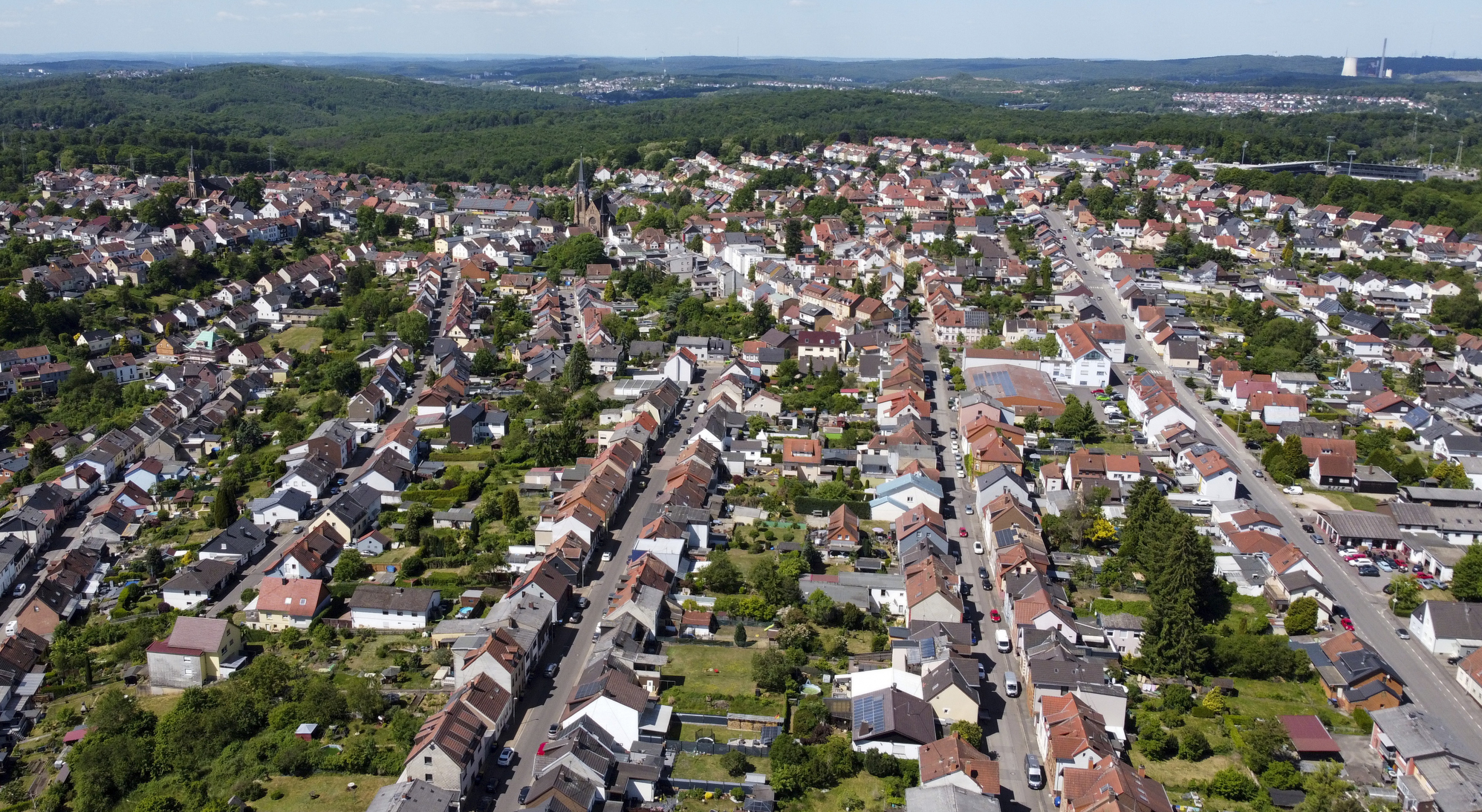
The village of Elversberg seen from the air
That original foundation was made under the name of FC Germania Elversberg which, after dissolving seven years later, was refounded in 1918 as Sportvereinigung VfB Elversberg. In 1952 it adopted the current name, SV Elversberg VfB 07with which he has just achieved a epic rise to the Bundesliga and that contains behind it one of those stories that show that in the beautiful sport everything is possible. It is a rise that has been brewed from the catacombs. Because the Elversberg is a usual modest club of the third and fourth division (even the fifth) of Germany, the latter category in which it was found in 2022.
The man who changed everything: Frank Holzer
To understand the miracle of the Elversberg, you have to know Frank Holzer. Born in 1953 in Neunkirchen, just five kilometers from the Elversberg stadium, Frank was a promising footballer in the 70s he reached the Bundesliga until an injury forced him to retire at 27 years old.
Frank wasn’t one to grieve. He enrolled in Pharmacy and, in 1984, he joined the family business that his father Albrecht had founded ten years earlier: URSAPHARM. What began as a small pharmaceutical business in the Saarland would become, under Frank’s direction, a a giant of ophthalmology with presence in 80 countries, turnover of 350 million euros and more than 800 employees.
This is how Elversberg celebrated its historic promotion to the Bundesliga
In 1990fate presented him with another opportunity. SV Elversbergthe club from their region, was mired in the anonymity of the lower divisions. Frank agreed to become president. For nearly two decades, Frank worked in the shadows, laying the foundation for something no one could yet imagine. In 2011 he handed over the presidency to his son Dominik.but remained chairman of the Supervisory Board. URSAPHARM became the main sponsor of the club, giving its name to the stadium and appearing on t-shirts with their Hylo brand. But the key is that Frank He invested around 13 million euros in the club, mainly in infrastructurenot in star signings. I didn’t want to buy success; I wanted to build it.
The turning point: Horst Steffen
On October 29, 2018, Elversberg was eleventh in the Regionalliga Südwest, the German fourth division. That day, he came to the bench Horst Steffenalso a former Bundesliga player, but still without success as a coach. However, there was something about him: a clear vision of how football should be played and the ability to convey it.
I worked with him Nils-Ole Book, 38, as sporting director. Book was the silent strategist, the brain who spotted young talent and managed transfers with almost supernatural skill. He based his strategy in bringing promising youngsters who needed quality minutes from the big German clubs in professional football. Young people arrive on loan, grow, shine, and everyone wins. An example is Nick Woltemade. He arrived on loan from Werder Bremen in 22-23. He shone so much that he returned to his club of origin and, a year later, he was signed by Stuttgart who subsequently sold him in the summer of 2025 to Newcastle for 75 million.


Nils-Ole Book.
After eight seasons of struggle, some of them staying at the doors of promotion, managed to return to third in 2022. The wait had its reward because One season was enough for him to rise to Bundesliga 2 for the first time.
After a first campaign of adaptation, in which it ended eleventh (the other two teams that went up with him, went down again), andIn the second he finished third. stayed to the point of going up directlybut at least he earned the right to struggle for a promotion he was about to achieve against Heidenheima rival with whom he has certain similarities. The team he almost sent to Bundesliga 2 debuted in the first division the previous season after having fought in semi-professional categories for much of its history. In the first leg tied in Heidenheim to two after leading 0-2. And, in the lapcruelly, lost 1-2 with a final goal in 95‘.
In May 2025, Steffen announced that he was leaving the club.. After almost seven years and 257 games, Werder Bremen from the Bundesliga had called him. It was his opportunity to lead in the elite. The people understood it. Steffen had earned that right. Who could replace him? The chosen one was Vincent Wagner39 years old, a young coach who had just led Hoffenheim U23 to promotion to the third division.

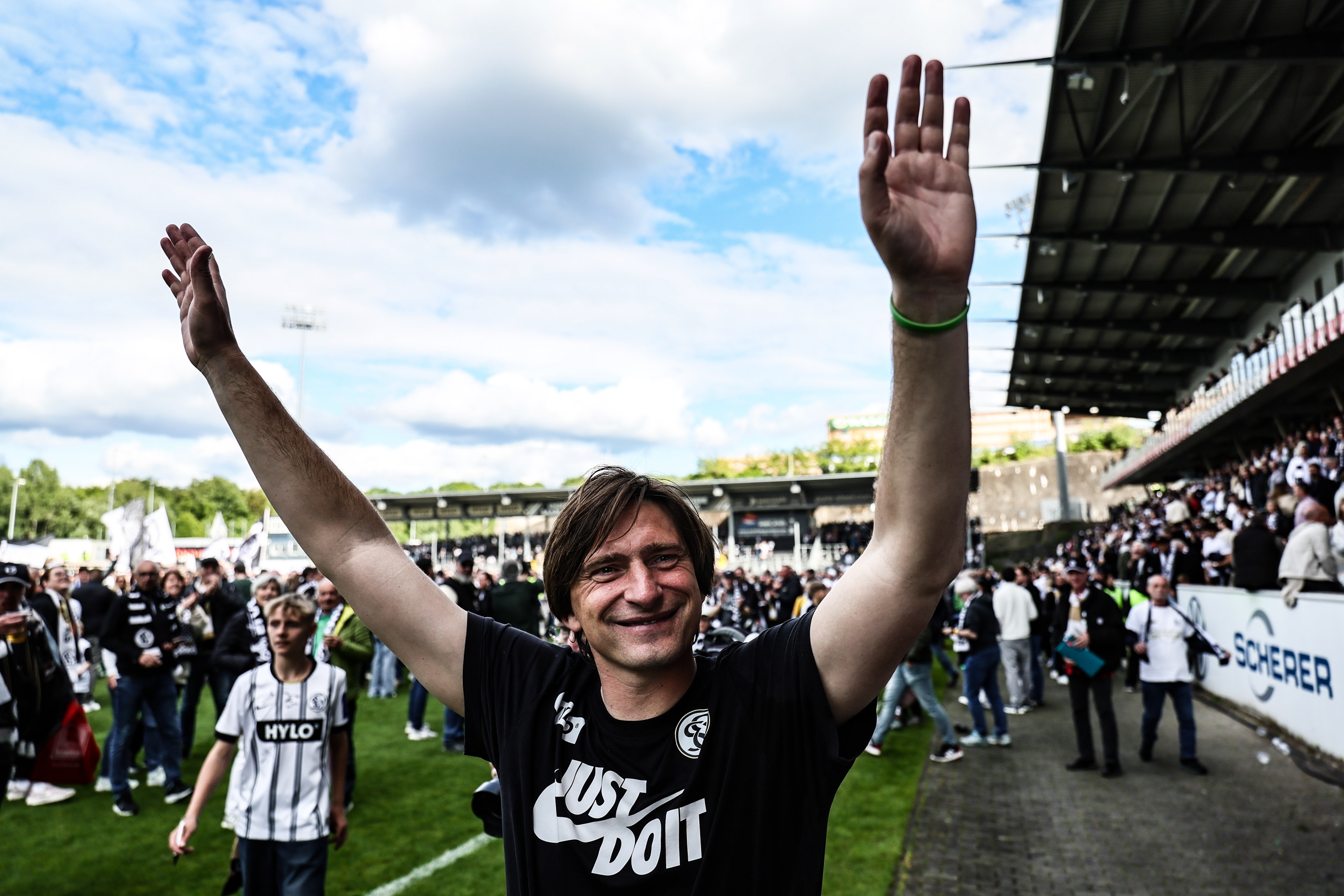
Elversberg coach Vincent Wagner celebrates promotion
The season has been brilliant, achieving promotion to the Bundesliga mathematicallyonly behind Schalke 04. And with a certain epic. On the penultimate matchday they lost, but the draws of their two rivals for promotion, Padernborn and Hannover, left them in a three-way tie on points, but with the option of depending on themselves on the last matchday. And they did not fail.
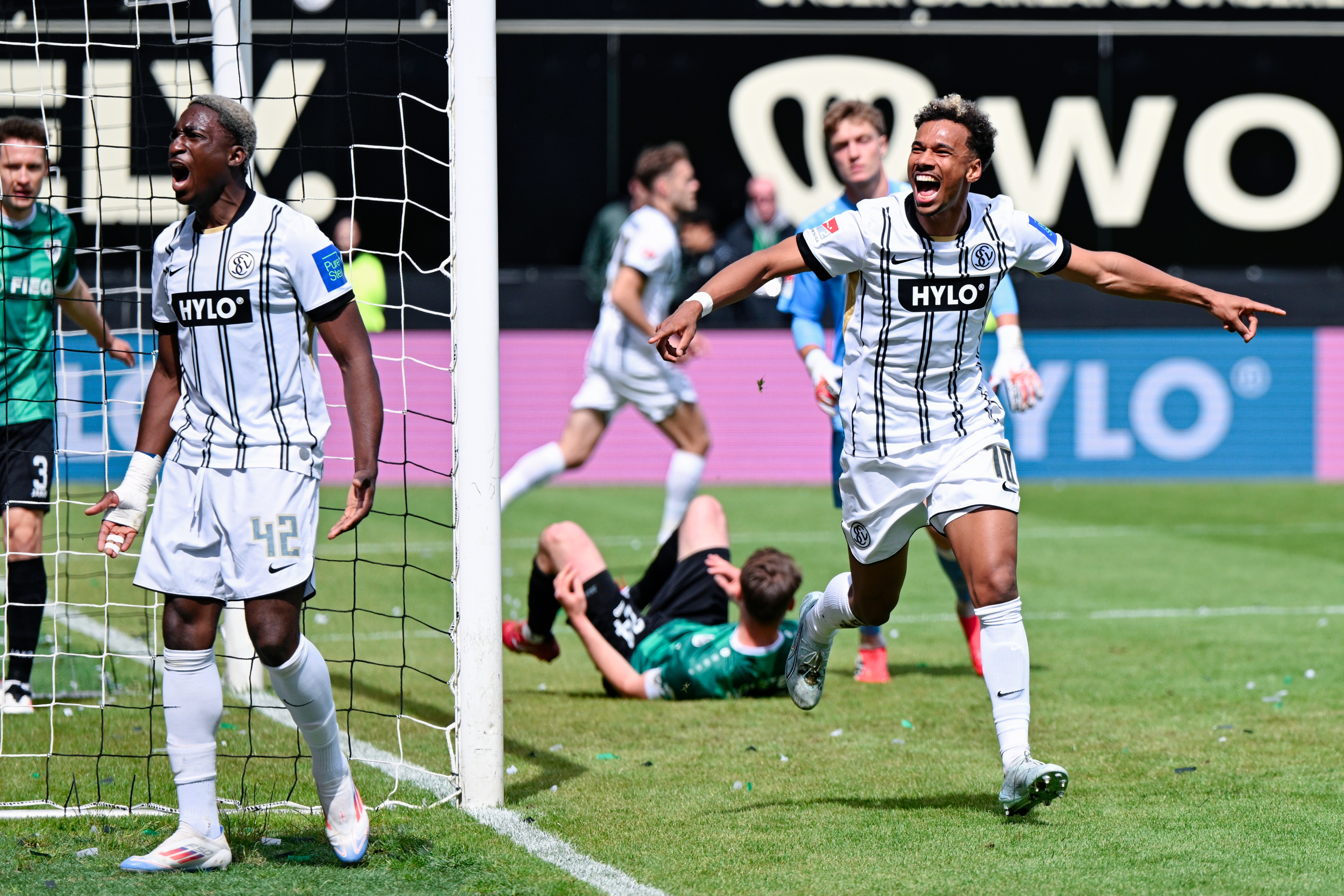
Bambase Conte celebrates one of the promotion goals
Making the leap from the Regionalliga to the top flight in just five years is an extraordinary achievement
German football bull has fallen in love with a unique team, as summarized by the general directors of the DFL (German Football League), Marc Lenz and Steffen Merkel: “Making the leap from the Regionalliga to the top flight in just five years is an extraordinary achievement. We welcome the 59th member in the history of the Bundesliga”.
No train station
Its location in the Saarland, where football has functioned as a point of social aggregation since the beginning of the 20th century, and its size explain a Mining town club DNAwith a strong identity at the local level, but little national projection until its recent streak of promotions. To get an idea of the magnitude of what this German club has achieved, just compare it with the teams in Spain. The club with the smallest population that has been in the First Division has been Eibarwhose density is approximately 27,000 inhabitants. Is more than double what Spiesen-Elversberg has.
But there is another more striking argument. We talk about a town so small that it does not have a train station. In fact, Deutsche Bahn, Germany’s main railway company, was forced to provide special services so that its inhabitants could go to the first leg of the ‘Relegation’ (as the double duel for permanence is known) against Heidenheim last season.
A stadium for all the people
Elversberg plays at the Waldstadion an der Kaiserlindethe stadium in the state-owned town of Saarbrücken, named after an almost 100-year-old lime tree (Linde) that unfortunately fell in 2015. It has currently been modified due to sponsorship issues. Ursapharm-Arena an der Kaiserlinde. Ursapharm, Holzer’s company.
Built between 1982 and 1983began having a capacity to 2,000 spectators. But the constant successes of the club and the fervent passion it awakens among its countrymen forced it to expand its capacity. First, to 6,000 spectators in 1996to later increase it to current 10,000, of which just over 6,300 are standing spaces and around 3,400 are seats, plus about 270 business area seats. That is to say, Practically the entire town fits inside.

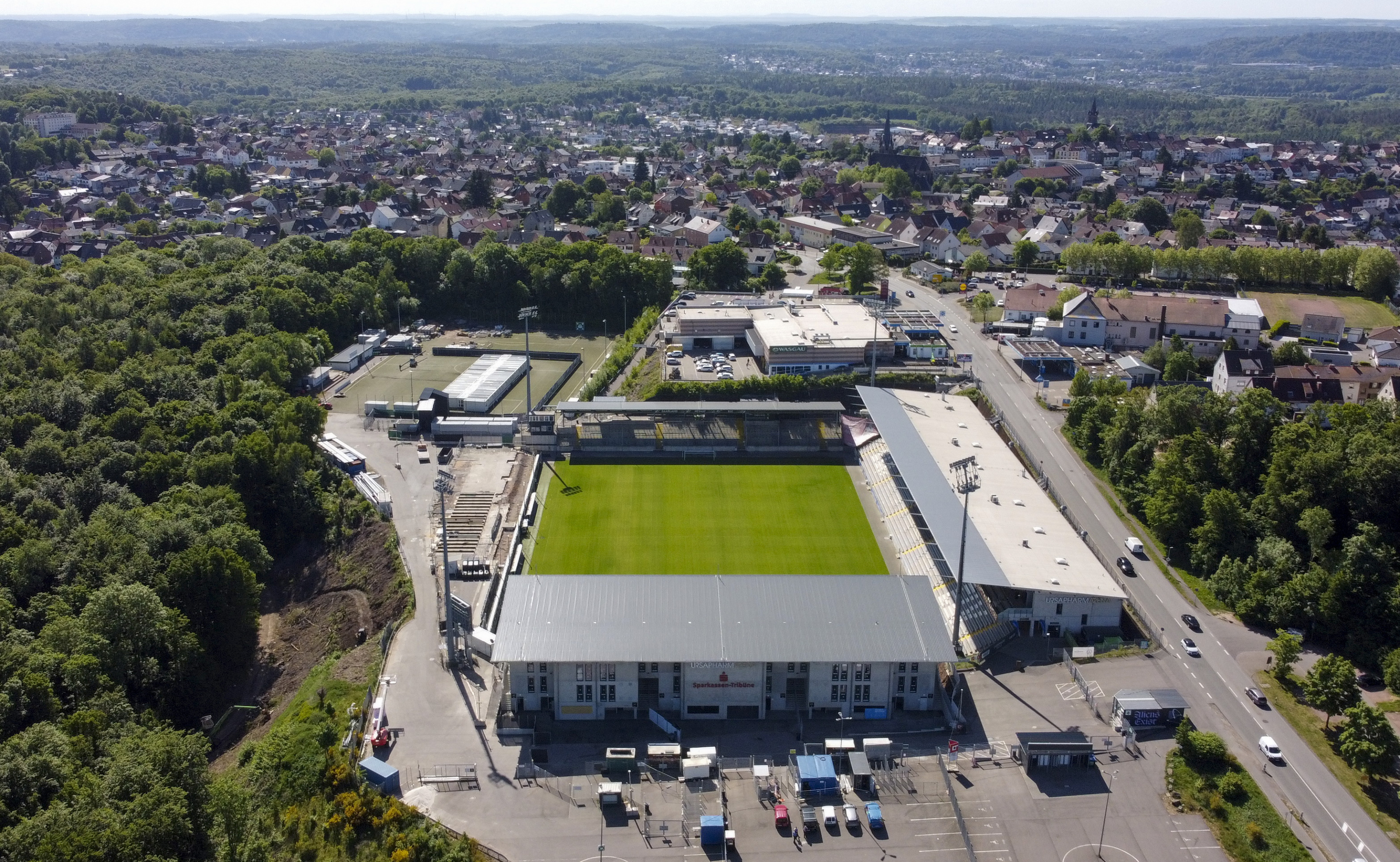
The Ursapharm-Arena, stadium of SV Elversberg
With these expansions have come modern improvementssome basic ones like artificial lighting and other more avant-garde ones, such as heating with underfloor heating, which have turned it into one of the most modern stadiums in the Saarland region.
The stadium configuration –majority standing stands, small size, residential environment with limited parking– promote an environment of proximity and a fan that coexists almost on the field with the team while reinforcing the character of a “small square” and that, however, already hosts professional football.
The stadium expansion works are progressing rapidly. Frank Holzer, now 73, still goes to every gamesitting in his box, watching his dream from 36 years ago come true. The town has changed. Now there are television cameras on weekends. Journalists from all over Germany come to write about “the miracle of the Saarland”. The 400 local business members, practically the entire business community in the region, support the club with pride. Black and white t-shirts are seen everywhere. And, from next season, they will also see each other in the Bundesliga.