
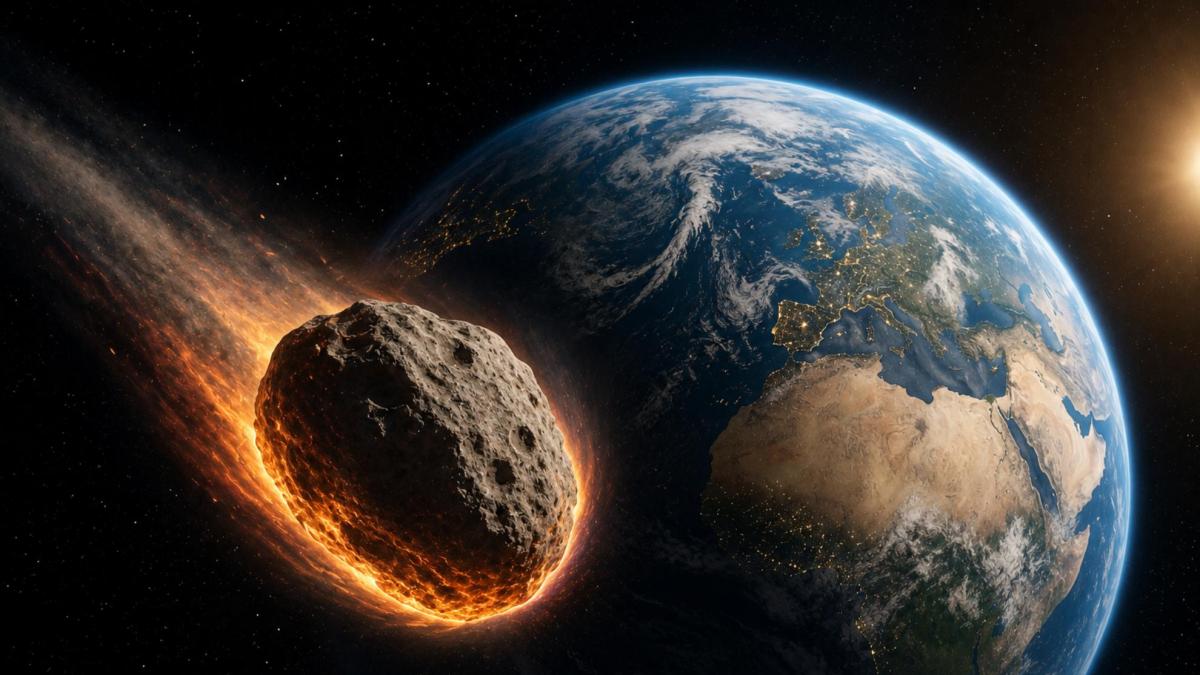

The image of a gigantic meteorite falling on Earth and causing the end of civilization has been part of the collective imagination for decades. However, the reality is much more complex. According to experts, There is no single possible scenario when a space rock impact occurs, as the effects depend on multiple factors, especially the size of the object.
Astronomers also remember that there is a difference between asteroid, meteoroid, meteor and meteorite. Before entering the atmosphere, these bodies are called asteroids or meteoroids; When they pass through the atmosphere and generate a light flash they are called meteors; and if any fragment reaches the earth’s surface it is called a meteorite. Despite this, in everyday language the latter term is often used to refer to any space rock with impact potential.
The scientific community agrees that smaller objects usually disintegrate before hitting the ground. In these cases they can produce spectacular fireballs visible from great distances, but without serious consequences. The situation changes when it comes to larger bodies. NASA establishes different threat levels depending on the dimensions of the object. Asteroids larger than a kilometer in diameter could cause global effects, while those larger than 140 meters would have the capacity to cause devastation on a regional scale. The US space agency estimates that approximately 95% of near-Earth objects larger than one kilometer have already been identified and none currently pose a threat to the planet.
Impacts of intermediate size are those that worry specialists the most. A recent example was the meteoroid that exploded over the Russian city of Chelyabinsk in 2013. With an estimated size of about 20 meters, it released energy equivalent to hundreds of kilotons of TNT and caused more than 1,600 injuries, mainly due to the breaking of glass caused by the shock wave. Scientists warn that objects measuring several tens or hundreds of meters could generate devastating explosions, fires, huge craters and severe damage over wide regions. If the impact occurred in the ocean, tsunamis could also be generated, the magnitude of which would depend on the specific characteristics of the collision.
One of the most studied scenarios is that of an asteroid about 500 meters in diameter. Scientific models suggest that an impact of these dimensions could have consequences far beyond the area directly affected. The enormous amount of dust and aerosols ejected into the atmosphere could block part of the solar radiation, causing a global drop in temperatures, alterations in the rainfall regime and serious problems for agriculture.
Experts point out that The danger of these impacts lies not only in the energy released during the collision, but also in the secondary effects on the climate. A prolonged cooling could trigger food crises and affect ecosystems across the planet. The best-known example of a catastrophic impact remains the one that occurred about 66 million years ago and is associated with the extinction of the non-avian dinosaurs. The responsible object, approximately 10 kilometers in diameter, formed the Chicxulub crater, on the current Yucatán Peninsula, and triggered a series of global climate changes that transformed life on Earth.
Despite this, specialists emphasize that these types of events are extremely rare. Precisely because the largest asteroids are also the easiest to detect, space agencies maintain permanent surveillance programs to follow their trajectory and evaluate any possible risk. In this area, planetary defense has taken important steps in recent years. In 2022, NASA’s DART mission managed to successfully modify the orbit of an asteroid through the controlled impact of a spacecraft, demonstrating that it is possible to alter the trajectory of these bodies if they are detected early enough.
Researchers insist that the key is time. The sooner a potentially dangerous object is identified, the easier the maneuver necessary to deflect it and avoid a future collision with Earth. For this reason, constant surveillance of space is considered one of the best tools to prevent risks and reduce the possibility of an impact becoming a real threat to humanity.