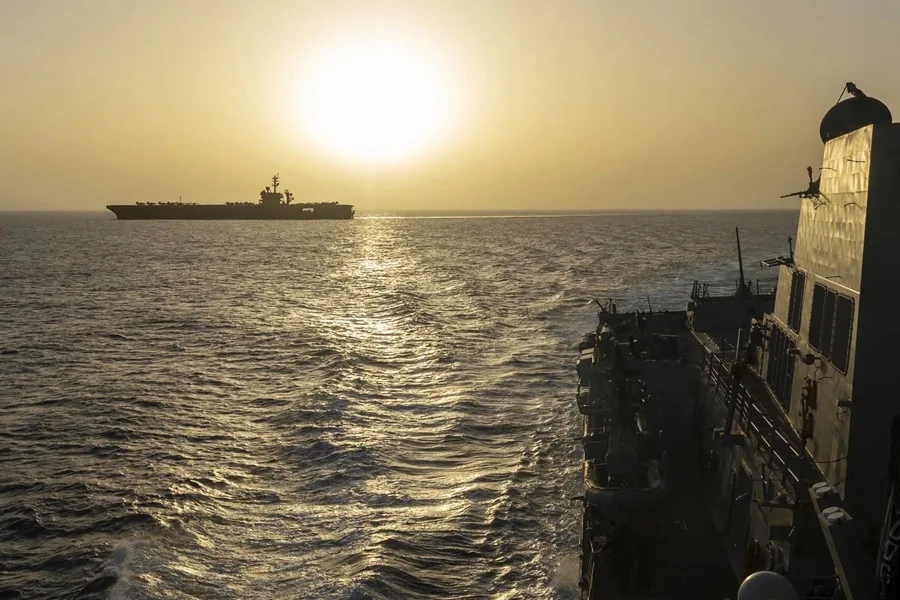
ANDunited states It has been preparing for conventional wars for decades: large fleets, aircraft carriers, air superiority and technological dominance. The problem is that in the Strait of Hormuz None of this guarantees real control of the terrain. Iranaware of its military inferiority in classical terms, has chosen to play something else. And there is the US mistake.
The Strait of Hormuz, through which it passes around the 20% of the world’s oilis not a scene of great naval battles. It is a narrow bottleneck, saturated with commercial traffic, where the threat does not need to be massive to be effective. It is enough that it is constant, unpredictable and credible.
A war designed to inconvenience, not to win
Iran has developed what many analysts call a strategy of “swarm war”: speedboats, drones, coastal missiles and naval mines. They do not seek to destroy the US fleet, something unfeasible, but rather to complicate each movement until it becomes economically unviable.
A ship passing through the Strait of Hormuz.EFE
The cost of this tactic is ridiculously low compared to the response needed. A drone or speedboat can cost thousands or tens of thousands of euros. Neutralizing it may involve the use of defense systems that cost millions. The equation is simple: wear down the opponent without facing him directly.
Furthermore, the psychological factor plays a key role. No need to sink tankers systematically. It is enough for there to be a real possibility of attack for insurers, shipping companies and captains to reconsider their routes. Fear becomes a weapon.
Useless superiority in a limited space
The US Navy remains the most powerful in the world, but its advantage loses value in an environment where the enemy is not exposed. Large ships are visible, predictable and, in some ways, vulnerable to asymmetric attacks.
Meanwhile, Iran You can operate from the shore, hide resources, disperse units, and attack when it suits you. You don’t need to control the strait. You just need to make no one feel safe crossing you.
That is the real problem for Washington: it has prepared a war of great scenarios, but in An uncomfortable war is fought in Hormuzfragmented and constant. And there, Iran’s weakness stops being a problem and becomes its greatest advantage.
Yamaha outboards are renowned for their impressive speed and performance on the water. Whether you’re looking for a powerful engine for fishing, leisure cruising,...
7 Shocking Facts About Yamaha Outboard Motor Prices in 2025 Meta Description: Yamaha outboard motor prices range from $1,000 to $55,000. Complete 2025 pricing...
ss=”rank-math-highlight” style=”background-color: #fee894″>Linda Noskova from the Czech Republic pulled off an impressive upset to secure her place in the semifinals of the prestigious Bad...